
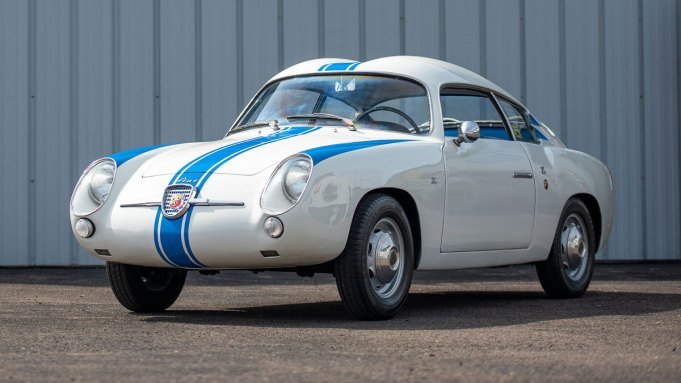
Unveiling the Elegance of the Fiat-Abarth 750 GT: A Masterpiece of Italian Engineering
In the resplendent tapestry of automotive history, few creations embody the audacious spirit and unparalleled artistry of Italian craftsmanship quite like the Fiat-Abarth 750 GT. Founded by the visionary Carlo Abarth in the sun-drenched streets of Bologna in 1949, this iconic vehicle arose from the melding of artistry and performance, captivating enthusiasts and collectors alike with its distinctive allure.
Throughout the vibrant decade of the 1950s, Abarth & C. ushered forth a profusion of vehicles that transcended conventional design, each model a testament to the marriage of elegance and raw power. While the robust Fiat 600 served as the backbone, Abarth’s alchemists infused life into these compact beauties, transforming them into veritable chariots of speed and agility that dominated their respective racing classes.
The Fiat-Abarth 750 GT, launched at the illustrious 1955 Turin Motor Show, stands as a beacon of this era, its silhouette a sensual departure from the utilitarian lines of its Fiat counterpart. Crafted under the watchful eye of the legendary Zagato, the bodywork exudes a graceful voluptuousness that whispers of both performance and sophistication. A mere glance reveals an automotive masterpiece, boasting voluptuous aluminum curves that seduce the eye and evoke a sense of timeless elegance.
Daringly compact, the 750 GT was sculpted with an agile 97-inch wheelbase and an overall length that flirted with insignificance, yet its engineering was anything but trivial. The interior, adorned in sumptuous blue vinyl, cradled the driver in its minimalist embrace, complete with a rally clock that artfully echoed its racing pedigree. Here, one is ensconced in a cocoon of purposeful precision, surrounded by the symphony of Jaeger instruments nestled gracefully within the dashboard’s domed pod.
Zagato’s pièce de résistance—a signature double-bubble roof—artfully elevates both aesthetic appeal and functionality, offering unobtrusive headroom for enthusiastic drivers who dare to don their helmets. Though this architectural flourish captures the spirit of innovation, the 750 GT’s limited production—fewer than 600 variants—renders it a coveted treasure, each iteration a unique narrative of passion and ingenuity.
Under the sleek skin of this exquisite creation, a spirited heart beats—a four-cylinder inline engine that, on the finest of days, delivers a respectable 72 horsepower. Adding to the car’s allure, the drivetrain prioritizes simplicity and efficiency, marrying lightweight aluminum components with a manual four-speed gearbox engineered for exhilarating responsiveness. The essence of racing beckons the driver to feel the pulse of the road beneath, every shift and turn urging one to embrace the spirited dance of velocity.
As the sun sets on the horizon, illuminating the soft curves of the 750 GT, one cannot help but reflect on the rarity of this jewel-like machine. Every model possesses its own history, and restoring a 750 GT is akin to breathing life into a storied legacy, the journey fraught with both effort and expense. Yet, the allure remains irresistible; an impeccably restored example commands a price that resonates with both passion and prestige, and ranges from $100,000 to $150,000 or more for the rarest of variants.
In the grand tradition of Italian automotive excellence, the Fiat-Abarth 750 GT serves not merely as a vehicle but as a testament to the artistry of engineering, a vibrant symbol of a golden era defined by speed, style, and unyielding spirit. Each curve, each roar of the engine, encapsulates an enduring sonnet of luxury and performance that remains timeless, forever imbued with the soul of its creator.
Discover more enchanting visuals of this 1959 Fiat-Abarth 750 GT “Double Bubble” Coupe Zagato here.