
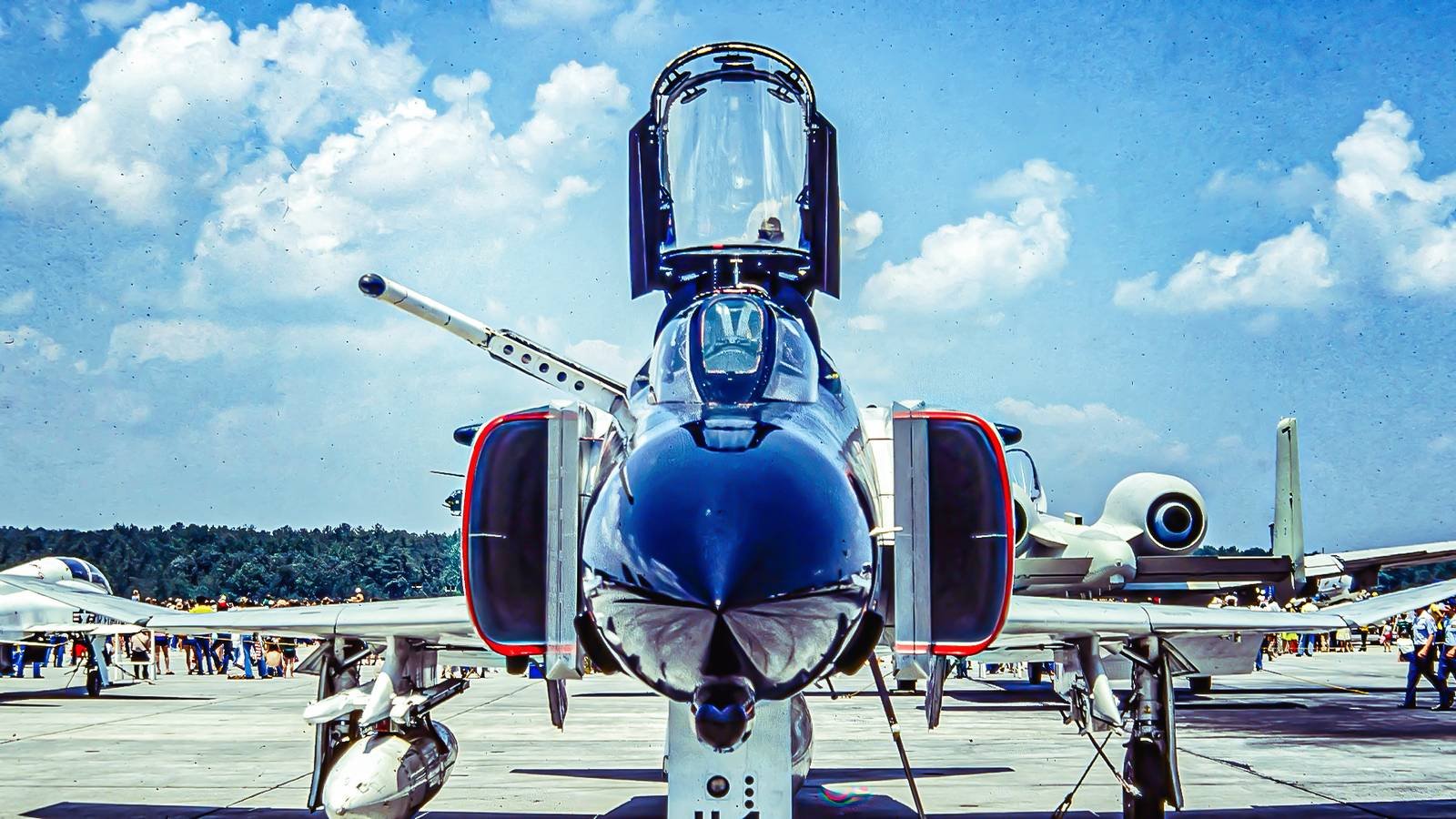
The Phantom Legacy: A Symphony of Power and Innovation
In the annals of aviation history, few aircraft evoke such a tapestry of emotion, nostalgia, and awe as the illustrious McDonnell Douglas F-4 Phantom II—a titan in the realm of supersonic fighter jets. Revered for its prowess and unparalleled engineering, this distinguished aircraft has woven itself into the very fabric of military aviation, leaving indelible marks across continents and generations.
The F-4 Phantom II first graced the skies under the watchful gaze of the US Navy, ushering in an era defined by cutting-edge speed, remarkable power, and a sophistication that belied its imposing structure. As the twin-engine behemoth ascended, it metamorphosed into the primary fighter platform for the United States Air Force and Marine Corps, boasting a staggering production total of 5,195—etched in history as the most mass-produced fighter jet ever.
A narrative strewn with valor and challenge shapes the Phantom’s legacy. Despite initial setbacks in the tumultuous skies of Vietnam, where its capabilities were put to the ultimate test, the F-4 won the hearts of pilots who admired its fierce speed and robust maneuverability. With deftness and agility, it carved out a legacy not merely as a weapon of war but as a symbol of resilience and might, embodying the determined spirit of those who flew it.
Yet, the Phantom II’s story does not fold neatly within military valor. Its evolution has seen it pressed into service by nations who embraced its legacy, including Iran, which now possesses the world’s largest remaining fleet of F-4s. This enduring connection—born during a pivotal turn in history—demonstrates the aircraft’s remarkable adaptability and the ingenuity of those who have preserved its capabilities. The Iranian fleet continues to soar, revitalized by innovation and a commitment to maintaining its aerial heritage.
The aircraft operates not just as a fighter jet, but as a canvas painted with technological advancements, often featuring upgraded systems from nations beyond its original creators. Within its fuselage lies a blend of ability and essence, narrating stories of transformation amidst adversity. The incorporation of Chinese and Russian avionics highlights a complex tapestry of global influence—a world where the past meets the present, transcending borders in a pursuit of aerial excellence.
In the annals of military aviation, the F-4 Phantom II stands as a crowning achievement of design philosophy, heralding the dawn of multirole fighters that became integral to air combat strategy. Its distinguished service paved the way for successors that now dominate the skies, yet none have captured the spirit and versatility quite like the Phantom, for even in retirement, its legend refuses to fade.
As we celebrate its magnificent journey, we acknowledge the generational impact and cultural resonance of the F-4 Phantom II—a resounding declaration of power, innovation, and the unmistakable human spirit that drives us to reach new heights. Through its legacy, this unparalleled aircraft remains a symbol of enduring excellence, inspiring future generations to aspire to the skies.