
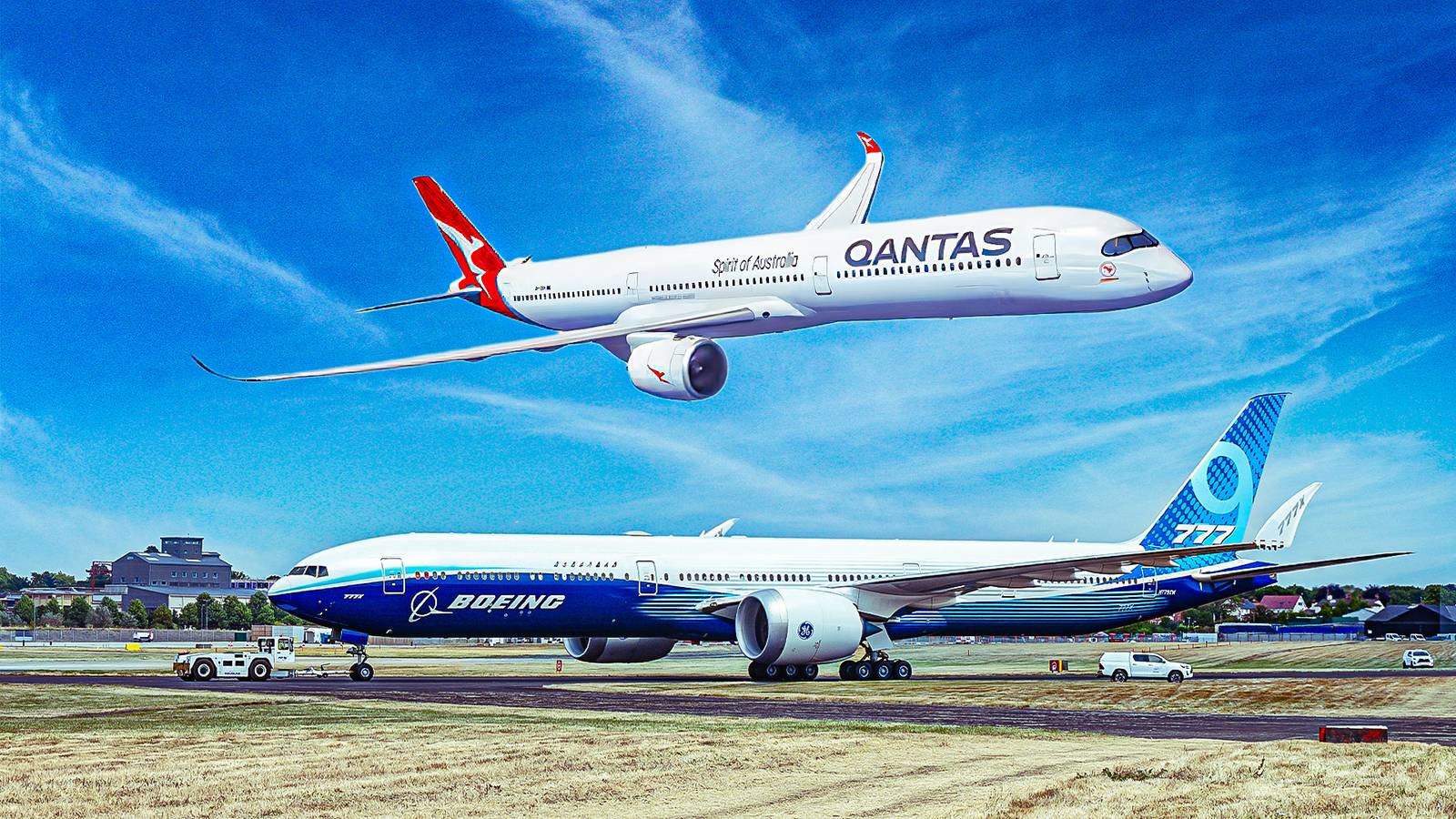
Title: Soaring into the Future: The Showdown of Next-Generation Ultra-Long-Haul Jets
In a world woven together by the threads of luxury and adventure, the realm of aviation has entered a transformative new chapter. At the heart of this evolution rests not merely progress, but an exquisite ballet of engineering artistry embodied in two titanic jets: the Boeing 777X and the Airbus A350-1000ULR. These flagship twinjets are not just vessels of travel; they epitomize the forefront of ultra-long-haul air travel, deftly connecting distant corners of the earth with unparalleled ease.
In an audacious leap towards engendering global connections, the ambition behind ultra-long-haul flight reaches new heights through Qantas’ illustrious Project Sunrise. Positioned to redefine airborne luxury and endurance, this initiative heralds the arrival of the Airbus A350-1000ULR, designed specifically to facilitate a seamless journey from Sydney to London—a flight that stands to become the longest commercial route ever undertaken. Meanwhile, Boeing’s 777X family lurks in the wings, poised for high-capacity routes that demand both efficiency and sophistication.
A Brief Overview of the Airbus A350-1000ULR
The Airbus A350-1000ULR emerges like a finely sculpted masterpiece, its contours augmented specifically to achieve illustrious feats in nonstop travel. Collaboratively designed with Qantas, its innovative rear center fuel tank and enhanced systems offer an audacious capacity for endless skies, allowing for breathtaking journeys of up to 22 hours.
This remarkable aircraft, capable of traversing beyond 9,700 nautical miles, promises to carve unprecedented nonstop pathways—transforming time zones and geography into mere footnotes of travel. Its sleek design is matched only by its commitment to passenger comfort. With an emphasis on well-being, the A350-1000ULR presents a refined cabin experience that cherishes tranquility, making it ideally suited for the arduous nature of ultra-long flights.
The Boeing 777X: A Modern Behemoth
Turn your gaze towards the Boeing 777X, a colossal titan bestowed with advanced technology. It is not simply an aircraft; it’s a modern marvel of engineering. This family of jets, comprising the Boeing 777-8 and the Boeing 777-9, delivers the perfect amalgamation of power, efficiency, and elegance.
With state-of-the-art GE9X engines and exquisite composite wings characterized by folding wingtips, the 777X not only pushes the envelope of operational efficiency but also maintains compatibility with existing airport infrastructures. It holds the promise of ultra-long routes, allowing airlines to connect major city hubs with an enticing blend of ample seating and upscale amenities.
A Comparison of the Two Jets’ Operational Capabilities
When graced with the choice between these two engineering masterpieces, airlines must consider not only the romance of travel but also the intricacies of logistics and passenger demand. The Boeing 777X shines brilliantly in hub-to-hub capacities, housing up to 426 passengers in a spacious twin-aisle setup—perfect for bustling routes that prioritize volume.
However, the A350-1000ULR takes a different approach, favoring a more specialized model tailored for endurance, complete with a deliberately opted low-density seating arrangement. This design ensures generous fuel capacity while delivering on the promise of comfort, poised to accommodate the unique challenges of record-length flights.
How Have Both Jets Sold?
The narrative of success for these titans is as complex as their engineering. The Boeing 777X, with its impressive order backlog buoyed by demands from premium carriers, shimmers on paper yet faces hurdles in production timelines. Emirates, the largest customer, has shown unrivaled confidence with substantial orders, affirming the aircraft’s allure in the competitive landscape of long-haul aviation.
Simultaneously, the Airbus A350-1000 has steadily made its mark with a solid operational presence. As deliveries continue to unfold within the airline industry, the A350-1000ULR introduces a niche yet monumental capacity, a testament to its design that aims for the extraordinary.
Why Did Qantas Choose the Airbus A350-1000ULR?
Ultimately, Qantas’ decision to embrace the Airbus A350-1000ULR was grounded in the architectural elegance and capabilities required for Project Sunrise. With a vision of minimizing travel durations and maximizing passenger comfort, this aircraft encapsulates the essence of luxury travel—transforming what was once a monumental journey into a refined experience like no other.
What Is Our Bottom Line?
As we unfurl the narratives entwined in the luxurious fabric of aviation’s future, the distinction between these two aircraft becomes evident. The Airbus A350-1000ULR stands as a symbol of unwavering ambition, designed for the audacity of nonstop travel previously unimagined. Meanwhile, the Boeing 777X, though advanced, represents a commendable evolution amidst a legacy of travel.
In this grand symphony of flight, it is clear that while both jets epitomize engineering brilliance, the Airbus A350-1000ULR emerges not just as a jet but as a fundamental shift in how we perceive global travel—boldly defying the very limitations of distance itself.