
Shadows in the Skies: The Veiled Network Sustaining Iran’s Aviation Fleet
In the quiet corridors of the global aviation industry, an intricate tapestry of shadow networks weaves through the heart of Iran’s commercial aerospace operations, illuminating a saga marked by stealth and audacity. For decades, a clandestine system of dummy companies and shell businesses discreetly fuels Iran’s seemingly defiant pursuits, enabling the ongoing operation of a fleet enriched with Boeing and Airbus aircraft, all while navigating the restrictive currents of international sanctions.
Iran’s aerial ambitions, complicated by the prohibitive forces of geopolitics, manifest in a fleet that, despite being restricted, finds a way to soar. As it stands, a remarkable collection of approximately sixty Boeing airliners is still believed to grace the skies above Iran. Nevertheless, beneath this aerial façade lies a reality where less than two hundred of the nation’s three hundred thirty civilian jetliners flutter with the pulse of airworthiness. Those that do manage to take to flight are not merely vessels of commerce but instruments of power, transporting materiel and personnel in service to various regional proxies.
Upon clandestinely acquiring these aircraft, Iran swiftly transforms them into dual-use transporters, integrating them into a sprawling logistics network, carefully orchestrated under the watchful eyes of the Islamic Revolutionary Guard Corps. Like phoenixes reborn from the ashes, these planes shed their original identities—foreign registrations vanish and, through a continuous cycle of leasing and trading among domestic airlines, an intricate labyrinth of ownership obfuscates the true story.
In a world where direct access to aviation parts has been curtailed by sanctions, Iranian airlines have birthed a parallel ecosystem, a veritable underworld of aviation survival. Partnerships with nations characterized by lax regulatory frameworks have fostered the proliferation of front companies, while the strategic execution of deceptive flight plans allows the entry of aircraft into Iranian airspace in a masterclass of evasion.
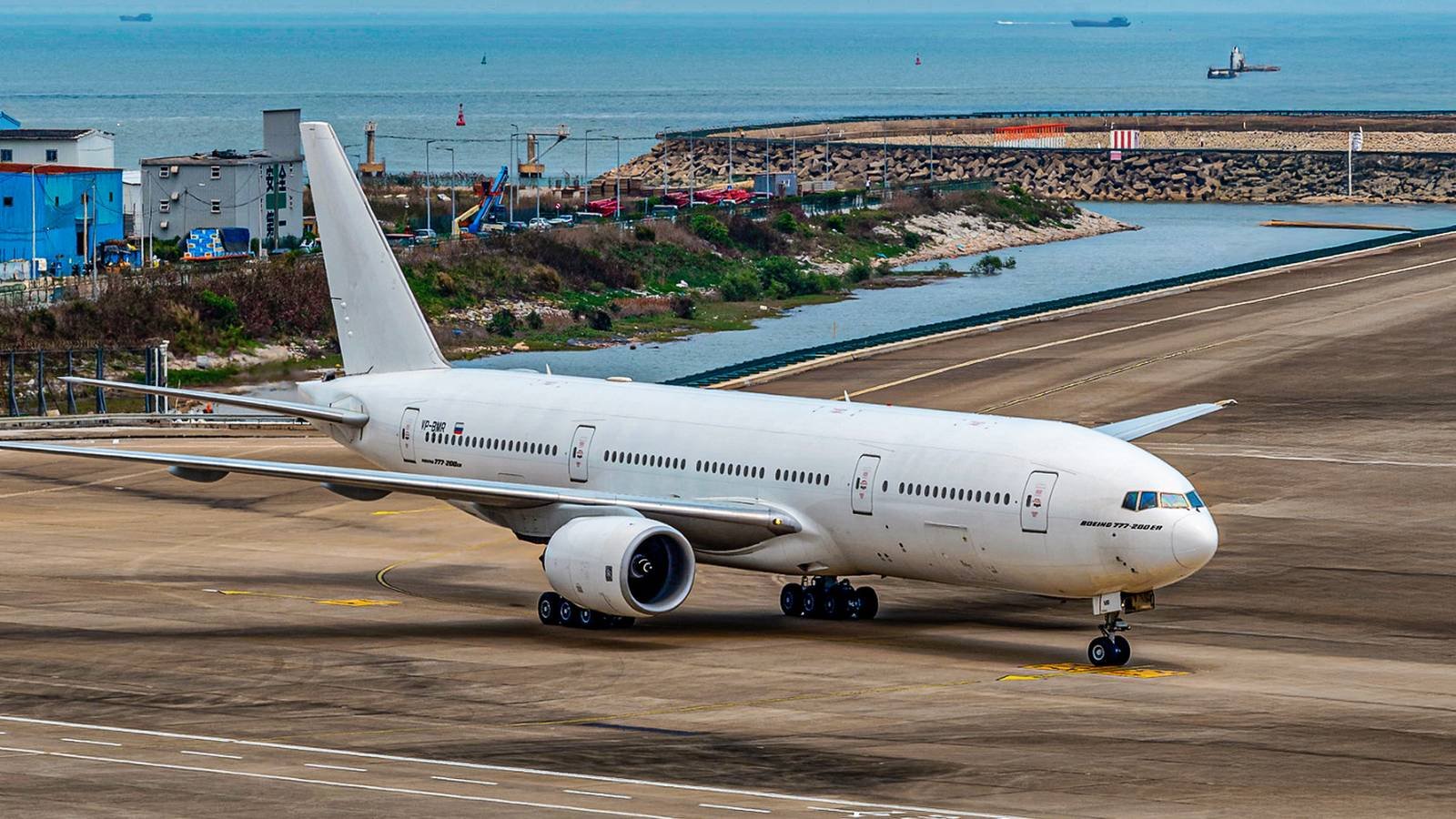
Rumors swirl about mid-flight diversions and document forgery as the lifeblood of this operation, wherein hijacked second-hand aircraft—a label that belies their newfound purpose—are reconfigured to blend seamlessly into the Iranian landscape. The narrative twists as wide-body Boeing 777-200ER planes are flown under false pretenses, their stories rewritten through fraud and intrigue before they are enveloped into the underbelly of Iran’s aviation machinery.
In this covert arena, resourcefulness reigns. The acquisition of used parts is a high-stakes game, where intermediaries navigate the choppy waters of a global secondary market. Iranian carriers, such as Mahan Air, cultivate relationships with brokers while scouring the world for components that will breathe new life into aging airframes. Parts snatched from retired aircraft across the globe traverse an elaborate network of front entities—all while the promise of cutting-edge engineering looms tantalizingly on the horizon.
As the wheel of innovation turns, Iranian domestic manufacturers strive to reverse-engineer essential components, aspiring to match global standards. With their Civil Aviation Organization proclaiming advancements in manufacturing capabilities, the dream of aviation autonomy stirs in the Iranian soul, though the lofty ambition to produce high-bypass turbofans remains tantalizingly out of reach.
In recent years, a partnership has taken flight between Iran and Russia—an intertwining of fates that has seen technical support, repair services, and even a melding of aerospace standards emerge from the midst of sanctions. The arrival of an Airbus A330-300 from Aeroflot to Iran’s Mahan Air heralds a new era, one where legally produced Iranian components could soon grace the aircraft of Russian carriers, solidifying a nexus of mutual benefit amidst a storm of international exclusion.
As this intricate saga unfurls, the ever-present specters of conflict hover, casting shadows over civilian aviation in the region. Targeted strikes and geopolitical tensions weave a tapestry of disruption, leaving Iranian aviation in a precarious dance of survival, clinging to the vestiges of its clandestine operations.
In the end, Iran’s aviation strategy is more than a mere tale of defiance against sanctions; it embodies the resilience and ingenuity that breathe life into the wings of an industry buoyed by the indefatigable spirit of its people—a spirit that refuses to be stifled, no matter the circumstances.