
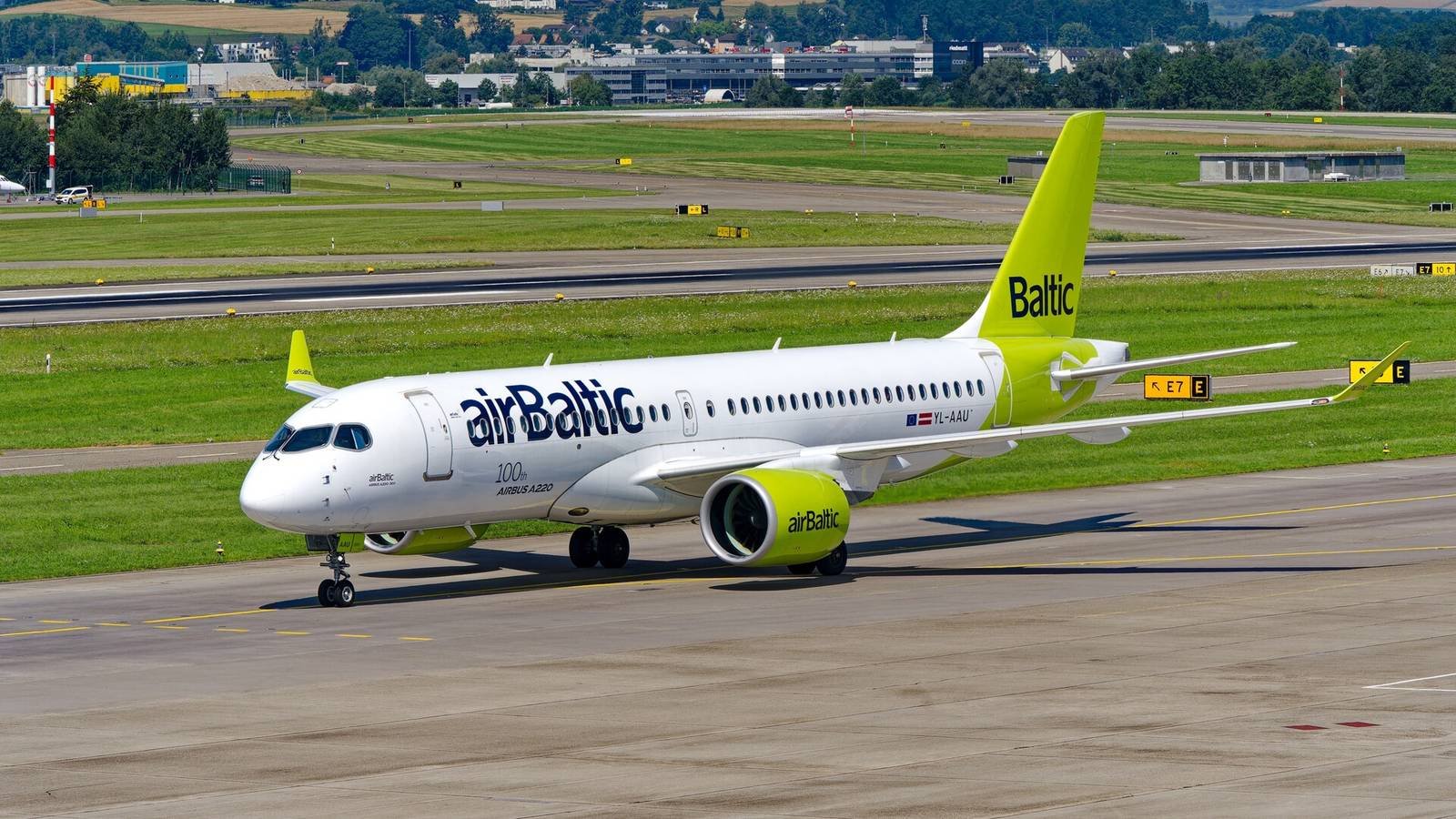
A Historic Loss: The Airbus A220’s Intriguing Journey from Skies to Ground
In the realm of modern aviation, tales of triumph are often interspersed with poignant episodes that reveal the fragility of even the most sophisticated machines. Such is the narrative surrounding the Airbus A220, particularly its unfortunate variant YL-AAO, a vessel long cherished by airBaltic, which recently succumbed to an unforeseen fate—an irrevocable loss on the ground that has captured the industry’s attention.
Nestled within the ornate halls of global aviation history, YL-AAO made its debut in an elegant ceremony in March 2019, after traversing the Atlantic from Airbus’s prestigious Montreal facility. Adorned with the name Jelgava, this aircraft embodied the pinnacle of engineering artistry, propelling airBaltic towards a new era of airline excellence. Yet, its tale would soon take an unexpected turn, plunging not from the sky, but from the unexpected depths of ground maintenance.
On a fateful day in June 2025, amid a comprehensive post-maintenance inspection, a harrowing incident unfolded during an auxiliary power unit ground test. A fire, its source traced back to an ozone filter within the environmental control system, ignited an inferno that ravaged the fuselage and the delicate wing root area. What began as a routine procedure transformed into a narrative of loss, eventually leading to the aircraft’s designation as economically irreparable by both airBaltic and Airbus specialists.
This intricate saga not only signals a significant financial setback for airBaltic, with a net impact recorded at a staggering €6.2 million, but also marks a poignant chapter in the annals of the Airbus A220 family—a family that had previously revelled in the sheer joy of flight and innovation.
As we peruse the landscape of aviation disasters, ground losses are intriguingly rare. Yet YL-AAO becomes the first documented casualty of this kind within the A220 lineage. It compels a deeper reflection on the nuances of aviation safety and the critical importance of rigorous maintenance protocols—the very foundations upon which the industry rests.
A file of notable aircraft casualties tales has emerged over the years, with echoes of the past reminding us of similar tragic instances. In November 2007, a brand-new Airbus A340-600 was ravaged during pre-flight tests in Toulouse, leading to its untimely demise. Similarly, an Airbus A300-600 was completely lost to flames while in the embrace of a hangar in Abu Dhabi. These poignant reminders serve as testimony to an unforeseen fragility, a reminder of the intricate dance between human ingenuity and nature’s unpredictable hand.
YL-AAO’s journey, while concluding in this sorrowful chapter, reflects broader themes within air travel, reminding connoisseurs of luxury and adventure that every flight, every ascent into the azure expanse, is underpinned by a remarkable interplay of technology, management, and human oversight. As we navigate the future of aviation, let us imbue every journey with respect for those intricate systems, for it is in understanding our history that we can pave the way for a future defined not just by flight, but by the stories of resilience and progress.
In celebrating the Airbus A220, we are reminded that behind the glossy veneer of aviation’s luxury lies a relentless pursuit of excellence, an endeavor that requires honoring every moment, every machine, as we soar through the ever-unfolding tapestry of the skies.