
Love, Duty, and the Unyielding Struggle for Belonging
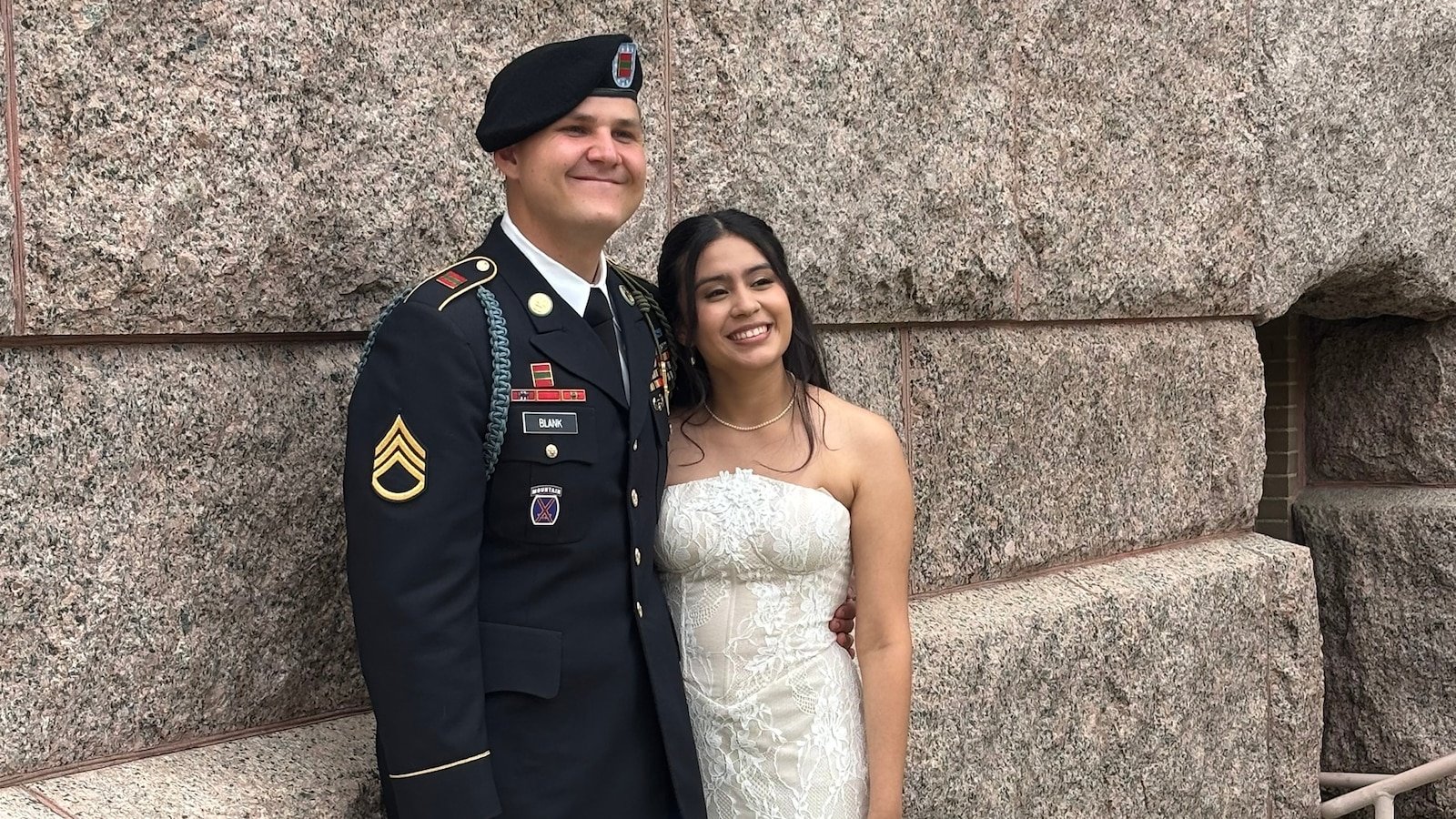
In the hallowed grounds of Fort Polk, Louisiana, where valor and commitment intertwine, an unfortunate chapter unfolded as love was abruptly overshadowed by the specter of immigration enforcement. Just days following their nuptials, Sergeant Matthew Blank, a resolute member of the United States Army, found himself in the harrowing position of fighting for the freedom of his beloved wife, Annie Ramos. This poignant tale unfolds against the backdrop of the complexities of immigration — a narrative filled with both hope and adversity, evoking the stark realities faced by many families in the shifting landscape of modern America.
As the sun cradled the afternoon sky, the couple embraced the promise of their shared future. Family gathered around to celebrate the milestones of matrimony and to assist in the adaptation of Ramos as a military spouse, a rite of passage that should have been filled with joy. Yet, as anticipation filled the air, it swiftly broke like glass, as Immigration and Customs Enforcement agents stormed into the scene, drawing a veil of bewilderment and despair across an emotionally charged moment.
“I never imagined that trying to do the right thing would lead to her being taken away from me,” mused Sergeant Blank, his voice heavy with heartache. “Instead of preparing for our future together, I am now fighting for her freedom.” Their story encapsulates not just personal anguish but serves as a powerful reminder of the fragile fabric holding together countless families navigating the tumultuous waters of legal status in a nation they call home.
Born in Honduras and just a child when the order of removal was issued, Ramos reflects the struggle of a generation yearning for stability within a country that has often felt like the only home they’ve ever known. “At any moment, that order may be executed, resulting in her deportation to a country she has never known,” articulated attorney Jessie Schreier. This relentless uncertainty casts an unforgiving shadow over their lives, stirring an urgent collective consciousness about the implications of such policies on military families like theirs.
In an era where paths to permanence are often convoluted, Ramos remains hopeful, having applied for Deferred Action for Childhood Arrivals amidst a backdrop of legal tumult and uncertainty—as if weaving the threads of an intricate tapestry with no clear pattern. Funding her education through TheDream.US, her ambition and resilience shine bright, even in the prevailing darkness of looming removal orders.
“Detaining a 22-year-old biochemistry student who embodies the spirit of resilience does not fortify our nation’s strength—it fractures the very families that form its backbone,” stated Gaby Pacheco, a poised advocate for TheDream.US. With fervent compassion, she implores those in positions of authority to reconsider the implications of depriving Ramos of her loved ones, indicating that such actions compromise the fundamental values upon which the nation was built.
The intricacies of legal standing, intertwined with the emotional toll of separation, have etched deep scars upon the hearts of those involved. Every heartbeat reverberates the longing for normalcy, a sentiment echoed by Blank’s mother, who described her daughter-in-law as “kind, smart, and dedicated,” invoking the aspiration for a future where familial bonds transcend bureaucratic barriers.
"Annie… should be able to build her life here, in a nation that my son is so committed to serving," Rickling ardently articulated, her voice a clarion call for compassion amid bureaucracy. The tears shared in kitchens, the laughter that only families can foster—these are the moments that define us, yet they remain fragile against the tide of legal complexities.
Amidst the uncertainty, Blank stands resolute. “I will fight for her release, I will stand by her, no matter what it takes,” he declared, a testament to unwavering loyalty that brims with the essence of love and duty. His unyielding resolve serves as a reminder that indeed, love knows no borders, and the pursuit of belonging is a universal quest.
In the entwined destinies of Matthew and Annie, we see not merely the struggle of one couple but the broader dialogue surrounding immigration, identity, and familial bonds. Their story is a poignant reminder of the human elements often shrouded in policy and red tape—an evocative narrative as vibrant as the sunsets over the majestic dunes of the UAE, where love and duty coexist despite myriad challenges.
Through this lens, we not only witness their fight but also reflect upon our shared humanity, encouraging the world to recognize that behind each statistic lies a story deserving of dignity and hope.