
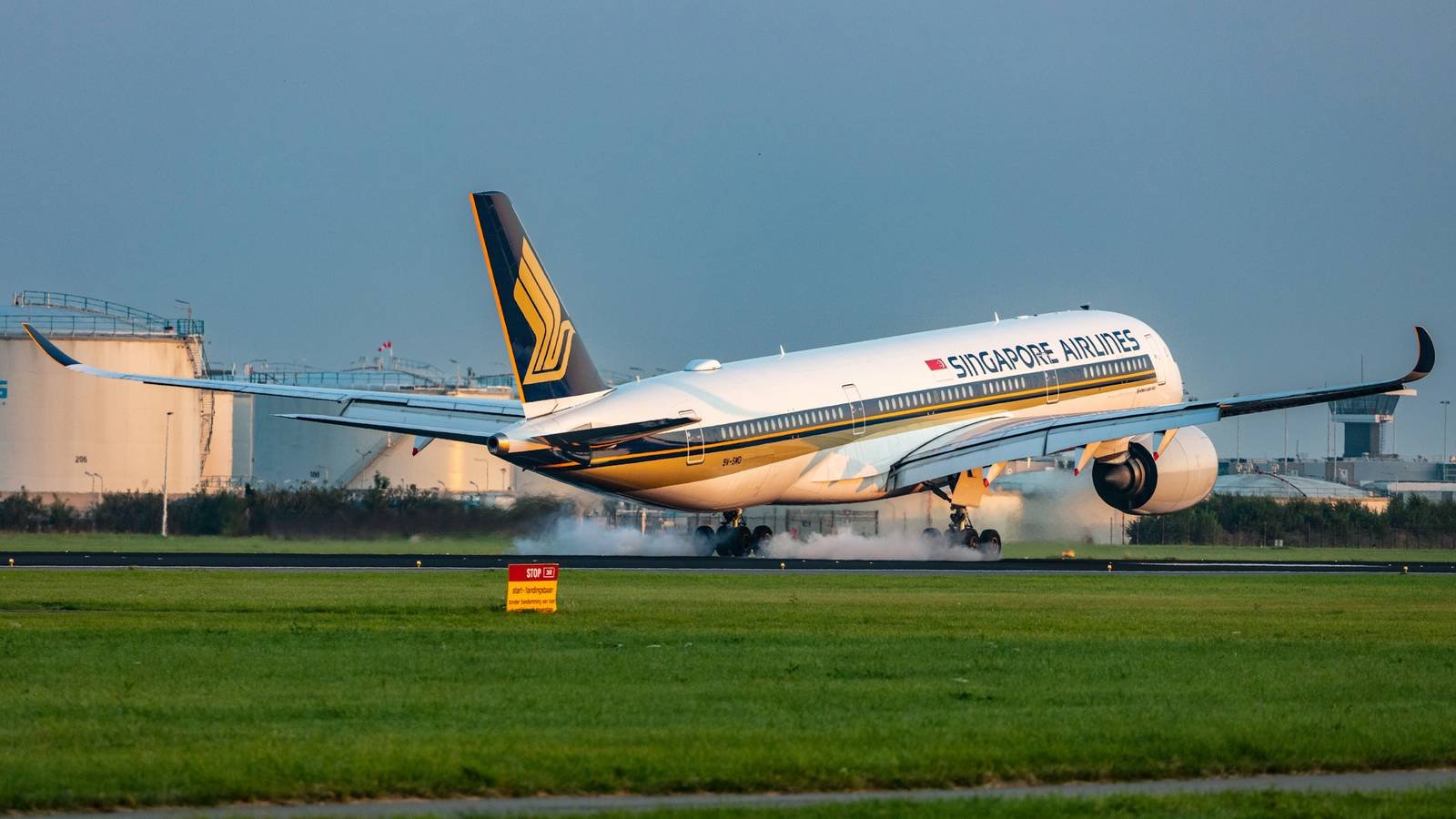
Charting New Heights: The Airbus A350 Unleashing the Future of Ultra-Long Haul Travel
In the ever-evolving realm of aviation, the Airbus A350 emerges as a dazzling jewel, poised to redefine the essence of ultra-long hauls. Imagine a majestic vessel, soaring across the cerulean skies for an astounding 18 hours, effortlessly bridging continents and cultures with grace and sophistication. This is not merely an aircraft; it is a beacon of modern innovation, a marvel that transforms lengthy journeys into seamless, even luxurious, experiences.
Nestled within its sleek exterior is a complex ballet of aerodynamics, thermodynamics, and structural artistry that empowers this titanic machine—an inspiring manifestation of elegance meeting engineering brilliance. The A350 invites you into a narrative where every ounce of weight is meticulously calculated, and every moment of flight is subjected to relentless scrutiny. Such is the pursuit of transcendence in commercial aviation, where boundaries blur and new frontiers beckon.
The aircraft’s unparalleled capability to embark on 19,000-kilometer journeys reincarnates the concept of travel, ushering adventurers into direct routes that once languished in the realm of the unreachable. Think, for instance, of a luxurious sojourn from New York to Singapore, an experience meticulously designed to captivate not just the destination but the entire journey. With the A350, the notion of “stopovers” becomes an anachronism, an outdated artifact of a bygone era.
The Limits of Possibility
As we delve deeper, we encounter the unseen forces shaping this engineering masterpiece. The maximum takeoff weight (MTOW) is a silent architect, governing each ultra-long-haul departure. With an MTOW of an impressive 322 tons for the A350-1000 variant, it demands a synergy of materials, physics, and design—a meticulous orchestration where the embrace of carbon-fiber wings harmonizes with the laws of gravity to defy expectations.
The A350’s unparalleled design pushes the limits of what’s feasible; each variant serves as an architectural canvas, stretching the boundaries of what long-distance travel can achieve. In its quest for connectivity, the aircraft’s intricate systems pave the way for ultra-long routes, transforming aviation into an art form that celebrates innovation while holding sacred the gravitas of engineering.
Yet, even within this realm of cutting-edge technology lies a paradox. The operational demands of ultra-long flights dictate an exhilarating dance of weight and balance. As the aircraft ascends, it must master the challenge of optimal fuel management. Imagine the brilliance of the A350’s capabilities as it deftly manages its fuel reserves amidst the delicate fluctuations of weight, allowing it to consume sustainably while still embracing the vast possibilities of the skies.
The Dance of Fuel and Elements
As we explore the complexities of fuel management, we find the aircraft functioning as a sophisticated reservoir. The journey between New York and Singapore, a breathtaking 9,487 miles, requires a full tank, often at the expense of carrying traditional cargo or numerous passengers. This delicate balance instills a newfound appreciation for the engineering marvel that is the Airbus A350, where eliminating superfluous weight translates to harnessing vast distances with unparalleled ease.
The aircraft, with its Rolls-Royce Trent XWB engines, embarks on a transformative ascent, maintaining its elegance while shedding burdensome weight in a slow, deliberate climb to its altitude. This transition serves as a striking reminder that achieving remarkable distances is as much a lesson in patience as in sheer mechanical prowess.
Conquering Climatic Challenges
The challenges of altitude introduce yet another layer of complexity. At altitudes soaring beyond 40,000 feet, the environment becomes icy, and the A350 faces the specter of cold soak—an invisible adversary to the journey. Here, sophisticated fuel recirculation systems ensure that the kerosene remains pliable, thwarting the threat of freezing while maintaining optimal efficiency. Each flight transforms into a test of resilience, where precision management of thermal energy becomes paramount.
The Art of Reducing Weight for Greater Reach
As airlines embrace the demanding task of reaching the world, they must engage in a careful reduction of cabin density, sacrificing traditional seating configurations to achieve the coveted balance between economics and performance. Singapore Airlines exemplifies this artistry, operating its A350-900ULR fleet with a luxurious yet minimalist approach, fostering a refined travel experience while ensuring that the aircraft’s extraordinary potential is fulfilled.
In this landscape of calculated reductions, every detail matters—the reduction of potable water, the minimization of catering galleys—all contribute to enhancing flight performance and unlocking the farthest reaches of global connectivity.
The Horizon Beckons
As we stand at the precipice of a new era in air travel, the Airbus A350, with its seamless blend of technology and elegance, sets the stage for a revolution in long-haul aviation. Connecting cities that once lay continents apart, it fosters a sense of global togetherness, forging paths to uncharted destinations and adventures.
Sitting poised atop a horizon that beckons, the A350 transforms the very fabric of travel, allowing us to dream of intercontinental journeys in an era characterized by unprecedented ease and luxury. This is not just about the destination; it is a refined dialogue with the art of flying itself—completely reimagined.
So as we glance towards the horizon, one anticipates the dawn of ultra-long-haul travel’s next chapter, where every journey becomes a testament to human ingenuity and the unyielding spirit of exploration.