
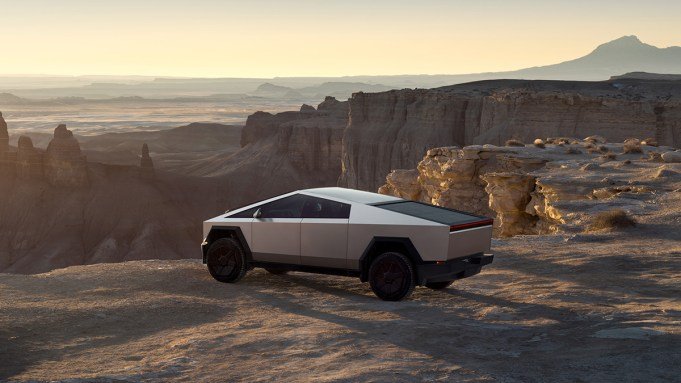
Title: “The Tesla Cybertruck: A Polarizing Icon Struggles to Captivate”
In the sprawling landscape of modern automotive innovation, the Tesla Cybertruck occupies a unique position—an enigmatic blend of futurism and controversy. Its recent sales figures have revealed a dichotomy: while the bold design captures the imagination of some, it has left many potential buyers decidedly unmoved.
Reports reveal that the truck’s sales figures, far from the meteoric rise once anticipated by its visionary architect, Elon Musk, have been buoyed by an unexpected lifeline—his sprawling array of enterprises. Buoyed primarily by the whims of SpaceX, which accounted for an impressive 1,279 of the 7,071 Cybertrucks registered in the U.S. during the fourth quarter of 2025, it becomes clear that the novelty of this striking vehicle has yet to fully resonate with the broader market.
In a landscape marked by shifting consumer preferences and competitive electric vehicle offerings, the Cybertruck stands out—not only for its distinctive crystalline design but also for the uncertainty that surrounds its appeal. Musk once boldly claimed it to be “the coolest car I’ve ever seen.” Yet, public sentiment appears more ambivalent, resonating with both intrigue and skepticism.
Data derived from S&P Global Mobility casts additional light on this intriguing landscape. In what could only be described as an internal production shuffle, Musk’s other companies, including Neuralink and the Boring Company, have also contributed to the truck’s numbers, acquiring approximately 60 vehicles during the same timeframe. Such moves raise questions about market validity—has the Cybertruck become an emblem of innovation, or a mere tool for corporate maneuvering?
While the Cybertruck boasts a formidable starting price of around $70,000, the mechanics of inter-company sales remain shrouded in secrecy. These transactions could signify substantial purchasing power, potentially exceeding an enticing $100 million, yet they also hint at a deeper, more troubling narrative. Without the lifeline from Musk’s various ventures, sales could have plummeted by a staggering 51 percent from the previous year, a stark contrast to Musk’s earlier projections of a necessity for 250,000 units annually.
Amidst this industry tumult, speculation arises about the vehicle’s divisive aesthetics and higher-than-anticipated pricing. As design critiques echo through the corridors of consumer dialogue, the notion of what constitutes desirable automotive art continues to evolve. The Cybertruck’s potential dangers in cityscapes and its recall announcements further complicate its standing in an already crowded market.
The voice of industry analysts echoes a chilling realization: the Cybertruck appears to be losing its allure. A trifecta of declining sales over three consecutive years has resulted in Tesla being eclipsed by BYD as the reigning champion of electric vehicle sales. In an effort to shift corporate direction, Musk hints at ambitious futuristic endeavors, yet concepts like robotaxis remain tantalizingly distant on the horizon.
In essence, the saga of the Tesla Cybertruck is one of extremes—a dazzling expression of ingenuity tinged with an unsettling uncertainty. As it traverses newly charted territory, will it emerge as a beacon of luxury and modernity, or be relegated to the annals of visionary ambition thwarted by market reality? In a world that thrives on both beauty and functionality, only time will unveil the true destiny of this polarizing automotive icon.