
Title: The Enigmatic Facade: Unraveling the Layers of a Chinatown Mystery
In the vibrant hub of Manhattan’s pulsating Chinatown, amidst an enchanting tapestry of cultural richness, stands a seemingly unremarkable six-storey monument, clad entirely in sleek glass, its reflective surface echoing the dynamic essence of the urban landscape surrounding it. Flanked by a luxurious hotel, an elite spa, and a quaint coffee boutique, this building is far more than just a mere structure; it serves as a silent sentinel to a complex narrative that unfolds within its enigmatic walls.
Recently unveiled in a courtroom drama echoing through the bustling streets, U.S. prosecutors allege that this site was a covert establishment—a clandestine outpost orchestrated by the Chinese government. The whispers of its purpose, articulated by prosecutor Lindsey Oken, evoke a chilling undercurrent: a space purportedly designed to silence, intimidate, and harass pro-democracy dissidents. Inside, a banner emblazoned with the words "Fuzhou Police Overseas Service Station, New York USA" hangs like an ominous reminder of its alleged role in a broader web of transnational repression.
Yet, the defense presents a counter-narrative steeped in community engagement. Lawyers for Lu Jianwang—who, at the age of sixty-four, finds himself at the epicenter of this storm—maintain that the building served merely as a community center. It became a cherished gathering place for members of the Chinese diaspora, providing them with the means to renew their driver’s licenses, engage in spirited games of ping-pong, and partake in cherished traditions like mahjong, particularly during the troubling times of pandemic-induced isolation.
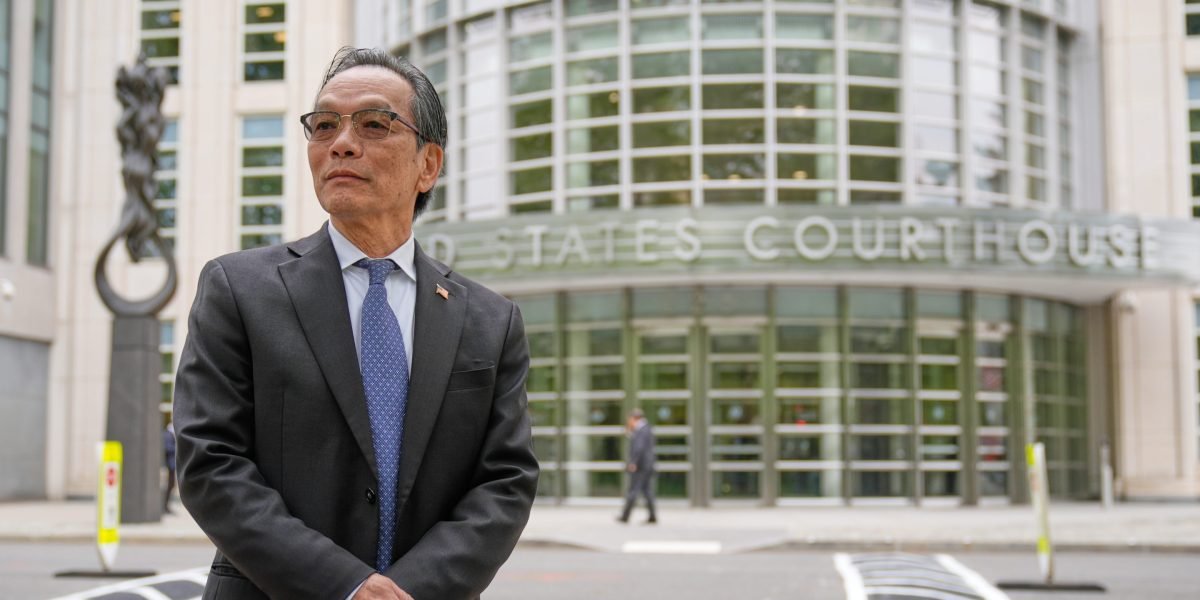
As the trial unfolds in the intricate corridors of Brooklyn federal court, it reveals not just a legal battle, but a profound exploration of identity and loyalty. The prosecution’s narrative paints Lu as a man living in the vibrant heart of New York City, yet tethered to the machinations of the Chinese government. His co-defendant, Chen Jinping, has already pleaded guilty, further entwining the fabric of this complex tapestry. Both individuals allegedly established the Manhattan outpost following an auspicious ceremony in their native Fujian province, marking the expansion of similar clandestine operations worldwide.
Compelled by a commitment to uphold the law, authorities have meticulously unraveled the connections that bind this case to a greater context of international intrigue. Prosecutors illustrate China’s broader strategy of surveillance, employing these outposts as appendages of influence over those perceived as adversaries, particularly in the shadows of the American landscape.
The American ChangLe Association, the community organization sharing this space, emerges as a vital player. It is portrayed as a social nexus for Fujianese expatriates—yet beneath this benign facade lies a labyrinth of implications, where serving the community blends seamlessly with the intricacies of foreign allegiance.
In this modern courtroom spectacle, the narrative pivots dramatically, revealing contrasting perceptions of heroism and betrayal. The defense attorney, John Carman, invokes the principle of common decency in his arguments; he presents Lu as a simple man entangled in bureaucratic red tape rather than a shadowy operative. “No good deed goes unpunished,” he proclaims, inviting jurors to explore the intricacies of intention and consequence.
Amidst this unfolding drama, the courtroom comes alive, imbued with a rich tapestry of emotions. Lu, known to many as Harry, sits at the defense table, clad in an elegant dark suit complemented by a pale blue tie. His limited grasp of English necessitates the whisper of an interpreter, delicately translating the proceedings into Fujianese, lending this pivotal moment an extraordinary depth of cultural significance.
Outside the hallowed courthouse, a movement brews—supporters gather, wielding banners emblazoned with slogans that champion justice and solidarity: "Justice for Harry Lu" and "Chinese Americans Are Americans!" Each spirited proclamation is a demonstration not only of loyalty but of the enduring pursuit of identity and belonging in a world as complex as it is beautiful.
As the trial unfolds, it delves deep into the intricate nexus of community, loyalty, and identity—a poetic exploration that encapsulates not just the fate of one individual but the ongoing saga of cultural interconnectedness that defines the vibrant mosaic of New York City’s Chinatown. In this delicate interplay of narratives, the fragments of truth glisten, sublime and elusive, beckoning us to ponder the broader implications of allegiance, both to country and community.