
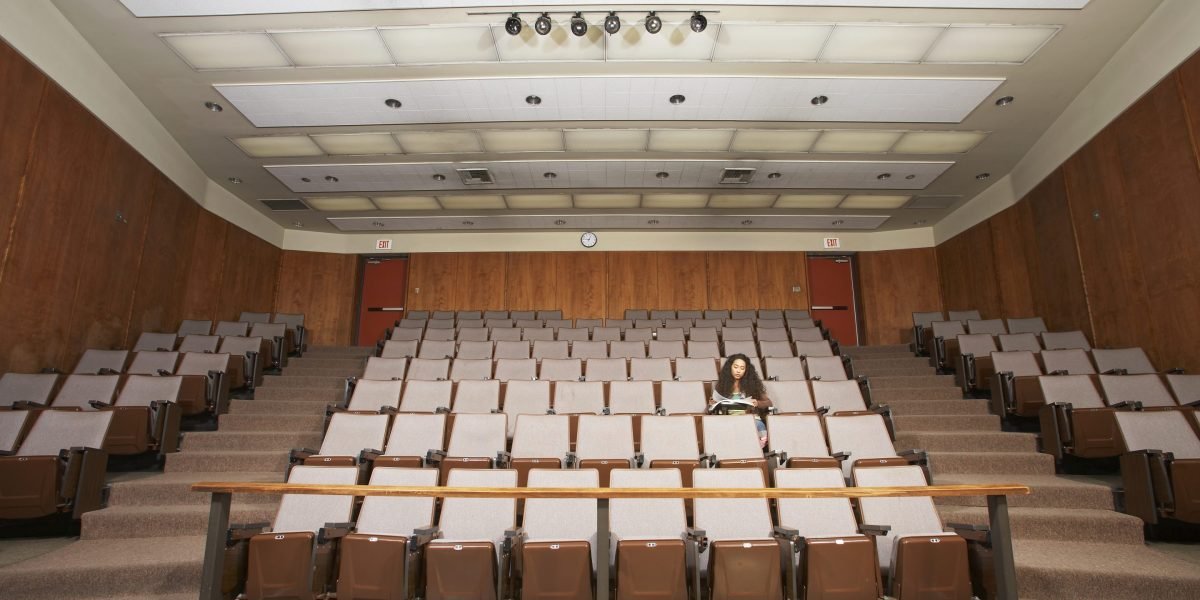
The Looming Enrollment Crisis: A Transformative Moment for American Higher Education
In a landscape that once echoed with the ambitions of countless young scholars, a disquieting silence is now manifesting across the hallowed halls of American universities. The delicate fabric of higher education is fraying, beset by a demographic shift that many have dubbed a ticking time bomb—a culmination of choices made almost two decades ago, sparked by the reverberations of the Great Recession.
As prestigious institutions release solemn updates that resonate like elegies for a bygone era, the only constant appears to be the climb of uncertainty. J. Michael Haynie, Chancellor of Syracuse University, recently articulated the unsettling truth: “Enrollment volatility is widespread, unpredictable and the new normal for even strong, well-resourced universities.” His candid acknowledgment of a significant shortfall in undergraduate enrollment illuminates a reality that is leading to tangible fiscal consequences—a forecasted budget deficit at a school that had previously weathered many storms.
Unfortunately, Syracuse is far from alone. Across the educational expanse of the United States, countless institutions are facing similar plights. The enrollment figures, which are a harbinger of financial health, tell a grim story: total post-secondary enrollment saw a mere one percent increase last fall, a startling drop from the previous year’s four percent growth. The smaller private colleges, the very heart of the liberal arts ethos, are teetering on the brink of extinction. As noted by observers, the cherished four-year college model is endangered, clinging to traditions while grappling with financial constraints.
The Decline of the Liberal Arts School
The cradle of liberal arts education finds itself in peril, with New England—a bastion of such academic ideals—facing closure announcements that ring like funeral bells. Hampshire College, having tread the path of inspiration and enlightenment, declared it would close its doors after the fall semester due to the unrelenting realities of dwindling enrollment. This heartbreak is not isolated; the region has witnessed the demise or merger of no fewer than thirty-two four-year colleges over the past decade.
As Sandy Baum, a distinguished researcher from the Urban Institute, observes, the landscape is shifting drastically. With an alarming statistic revealing sixty colleges vanish from the educational map annually—predominantly affecting those smaller private institutions—one cannot help but envision a future where the soul of liberal arts education may become a mere whisper in the annals of time.
Where Have All the Kids Gone?
The transformational landscape of our academic institutions is not solely a tale of declining numbers; it is also woven with the narrative of rising expenses and pressure to adjust. As leading state universities brace for steep budget cuts that echo throughout their corridors, the University of Vermont recently grappled with a staggering twelve million-dollar budget deficit due to a 15 percent decline in freshman enrollment. The echoes of this financial distress reverberate further, with the University of Wyoming facing a fifteen million-dollar shortfall, exacerbated by inflation and shrinking enrollment figures.
Notably, flagship state universities have not been immune to this existential crisis. In the face of fierce competition and evolving demographic realities, many institutions are navigating the treacherous waters of changing enrollment trends, particularly among out-of-state and international students whose numbers are dwindling. The allure of American education, once irresistible, is dimming, as financial constraints and geopolitical tensions reshape aspirations.
Baum aptly remarks, “There’s a decline in the number of high school graduates in this country. This is not a surprise.” With the clock ticking ever louder, the specter of the demographic cliff looms ominously, reminding us that choices made long ago now bear fruit—ripe or withered.
Trouble for the Little Guys
In stark contrast, elite institutions, with their storied reputations and robust endowments, seem insulated from the storm. However, flagship schools—and particularly those that exist in the shadows of prestige—are increasingly feeling the winds of competition. Last year, Syracuse, in a desperate bid to enhance its enrollment figures, resorted to extending scholarship offers to wavering students—a mere reflection of the larger crisis unfolding across many campuses.
While larger institutions engage in calculated maneuvers, such as lowering class sizes to enhance educational quality or extending outreach to adult learners, the smaller, tuition-dependent colleges find themselves more vulnerable than ever. Baum eloquently captures this dilemma, indicating that many of these institutions, unassisted by significant endowments, are facing inevitable closures.
As the landscape of higher education is irrevocably transformed, one can only hope that within this upheaval lies an opportunity for reinvention—a chance to breathe new life into an academic tradition that has long nourished the imaginative and intellectual endeavors of generations. In this delicate balance between survival and evolution, the narrative of American higher education continues to unfold, echoing the innovative spirit so deeply rooted in the cultural fabric of the United Arab Emirates and beyond.
As we stand at this crossroads, the question remains: will we embrace the challenge and create a path forward, or will we watch as history unfolds without us? The future of higher education hangs in the balance, beckoning with the promise of potential transformation.