
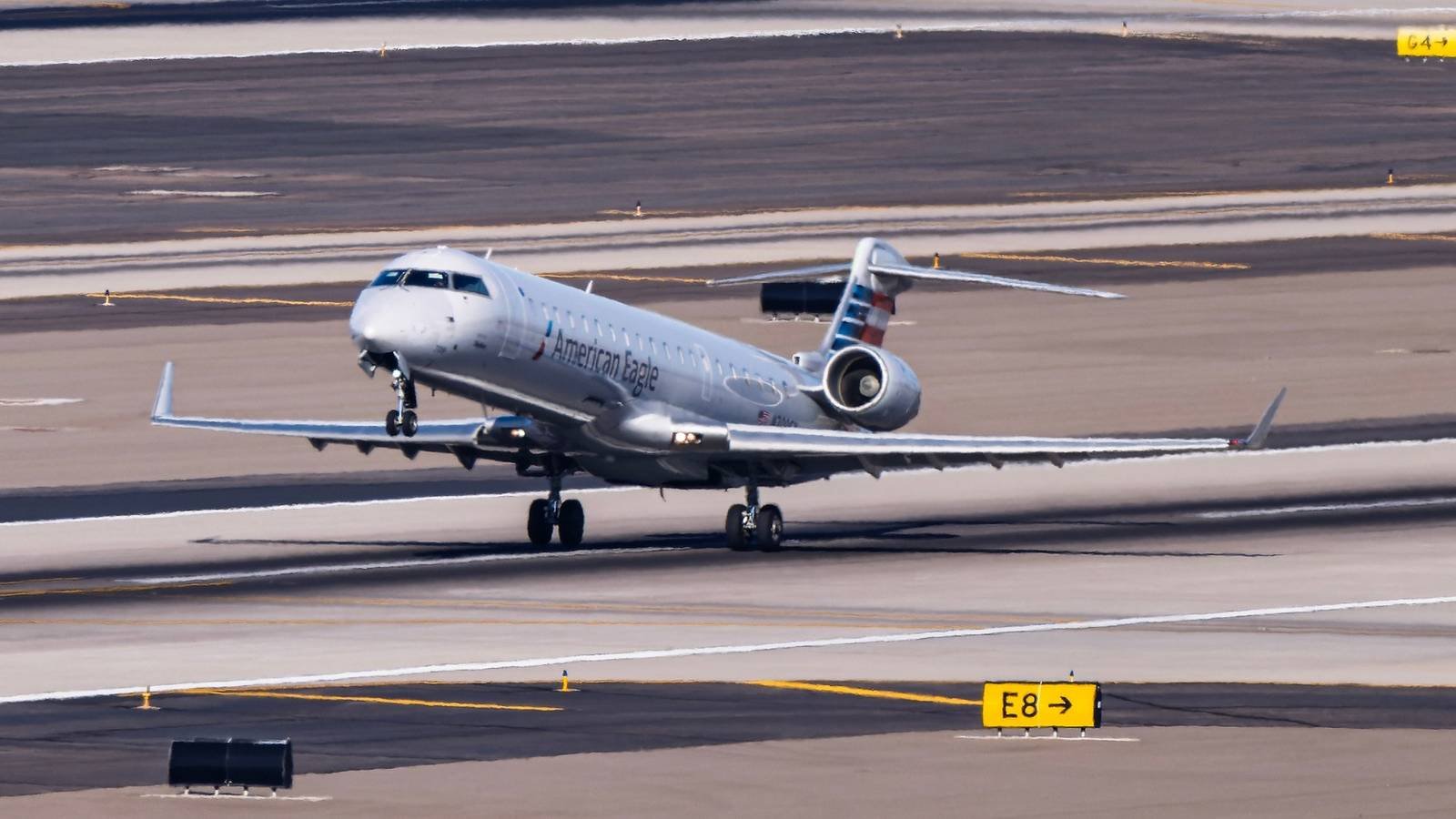
A Shift in the Winds: The Potential Impact of Canada’s Aerospace Industry on American Airlines
In the intricate dance of international commerce, where steel and wings entwine, whispers of disruption emanate from the United States. The striking rhetoric from President Donald Trump expressed on social media has reverberated through the corridors of power and industry alike, as he threatens to decertify aircraft manufactured in Canada. With a proposed 50% tariff looming ominously over the nation’s aerospace landscape, the ramifications on American carriers and their daily operations could be sweeping and profound.
As the grand tapestry of aviation unfolds, the fabric woven by Canadian manufacturers, especially the illustrious Bombardier, forms an integral part of American regional operations. Their aircraft, renowned for efficiency and reliability, serve as the backbone of esteemed airlines, rendering the stakes of this discourse particularly high.
The delicately balanced ecology of air travel is intricately interlinked with these aircraft, which play a pivotal role in the expansive operation of American Eagle—an entity under the umbrella of American Airlines. Data from Cirium, a respected aviation analytics company, unveils that in February alone, American Eagle has slated an astonishing 81,499 regional flights, a symphony of transportation harmoniously conducted by a consortium of feeder partners. Among these, the Bombardier CRJ700 and CRJ900 jets claim a significant 28,345 flights, collectively extending their reach to almost two million seats; a significant lifeline for travelers.
Amidst this narrative, Bombardier has voiced its awareness of the President’s concerns, stating, "We have taken note of the post from the President of the United States on social media and are in contact with the Canadian government." Such statements tap into the urgency of the moment, reflecting the interconnected nature of the global aviation landscape.
Moreover, the Delta Connection, the embodiment of regional service excellence, heavily relies on the Bombardier lineage, with a staggering 26,876 flights integrated into their operational calendar. This reliance engenders a critical dependency on these Canadian marvels, which together offer up to two million seats in a thriving market. The interplay between regulatory decisions and the operational freedoms that airlines once took for granted now hangs in a delicate balance, one that could easily tilt the scales in unforeseen directions.
As the heart of trans-border aviation beats with the rhythm of commerce, the implications of any decertification extend beyond American soil. Canadian airlines, such as Air Canada, bolster service with over 2,500 flights to and from the United States, weaving an intricate web of connectivity that benefits countless passengers across North America.
In reflecting on the potential impact of such monumental shifts, one must consider the intricate tensions that could arise from tariff introductions and certification challenges—could these lead to inflated fares or diminished flight frequencies? The rich tapestry of North American air travel is one that thrives on interdependence, a dance of necessity and ambition that binds nations, operators, and passengers alike.
In the face of uncertainties, the collective hope remains that wisdom will guide decisions and that the spirit of collaboration will rise above the turbulence of political proclamations. For the allure of the skies must ultimately be preserved, as travelers continue to dream, to connect, and to explore—a testament to the robust interplay of cultures and commerce that defines our modern era.