
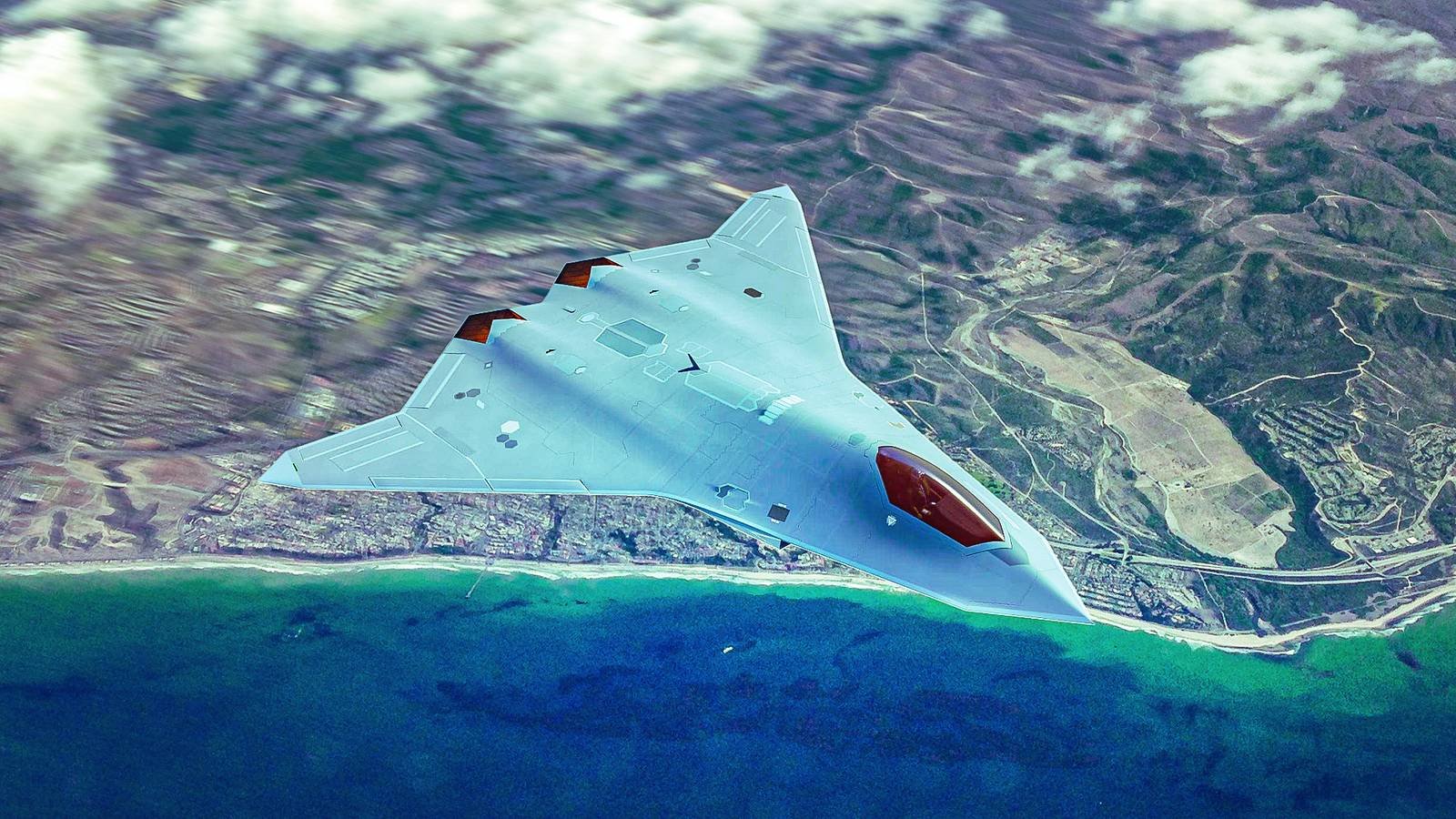
The Race for the Skies: A Cinematic Glimpse into Next-Generation Air Dominance
As the dawn of a new age in aerial warfare approaches, global powers are engaged in an intricate dance of innovation, ambition, and strategy. Fueled by unwavering aspiration for superiority in the skies, nations are unveiling their latest marvels of engineering, solidifying their positions in a high-stakes game of military aviation. The stage is set for a breathtaking spectacle as we explore the latest advancements in stealth technology and aerial prowess.
Amidst the whispers of ambitious prototypes emerging from China’s robust aviation industry, the world gasps in wonder. The People’s Liberation Army, a vanguard of aviation progress, recently heralded the debut of a fully functioning technology demonstrator, an accomplishment that reverberates beyond its borders, igniting a sense of urgency among Western adversaries. The intriguing interplay of innovation and rivalry paints a vivid tableau of anticipation; however, the journey from prototype to production remains shrouded in the complexities of time and engineering refinement.
In this fascinating narrative, the United States and European partners are racing to showcase their own advancements. The Boeing F-47 and F/A-XX, poised to redefine air combat, are on the verge of production, promising a tantalizing glimpse of the future. With a freshly inked $20 billion contract, Boeing embarks on crafting a revolutionary fighter jet that epitomizes modernity, intricately designed to interact with a fleet of autonomous drones, weaving an intricate network of aerial intelligence and responsiveness that has never before been seen.
While majestic prototypes take to the skies, the J-36, with its striking diamond-double-delta silhouette, metaphorically glides through the realms of potential and speculation, testament to China’s ambition. Yet, the very fabric of advanced aviation is woven with challenges and hurdles, especially in the fields of propulsion and systems integration, which significantly lag behind their Western counterparts.
As we cast our gaze across the evolving landscape, the Global Combat Air Program (GCAP)—a collaborative endeavor involving the United Kingdom, Japan, and Italy—paints a picture of unity amid diversity. This ambitious venture marries innovation and heritage, blending separate visions into a singular entity destined to transform the aerial battleground. The GCAP stands as a tribute to the future, designed to incorporate artificial intelligence and uncrewed systems, promising to elevate warfare into a realm of the extraordinary.
Yet not all stories are uncomplicated. The Future Combat Air System (FCAS) has encountered treacherous waters, ensnared in a web of geopolitical and economic challenges—its dream seemingly delayed. Discord among the finest European engineering minds could hinder the systematic unveiling of next-generation capabilities, pushing their anticipated service entry into the realm of another decade, as the world eagerly awaits revolutionary breakthroughs.
In a world captivated by the power of the skies, innovation persists like sunlight breaking through clouds. As the United States solidifies its stance with the F-47—an embodiment of cutting-edge stealth technology, designed for seamless interaction with supportive autonomous aircraft—the horizon radiates both hope and determination.
Thus, the narrative of the world’s next-generation air dominance unfolds like the pages of a grand history, each nation maneuvering with purpose, ambition, and elegance that reflect the soul of human ingenuity. As we stand at this precipice of military evolution, our eyes turn skyward in anticipation—ready to embrace the future, one graceful flight at a time.