
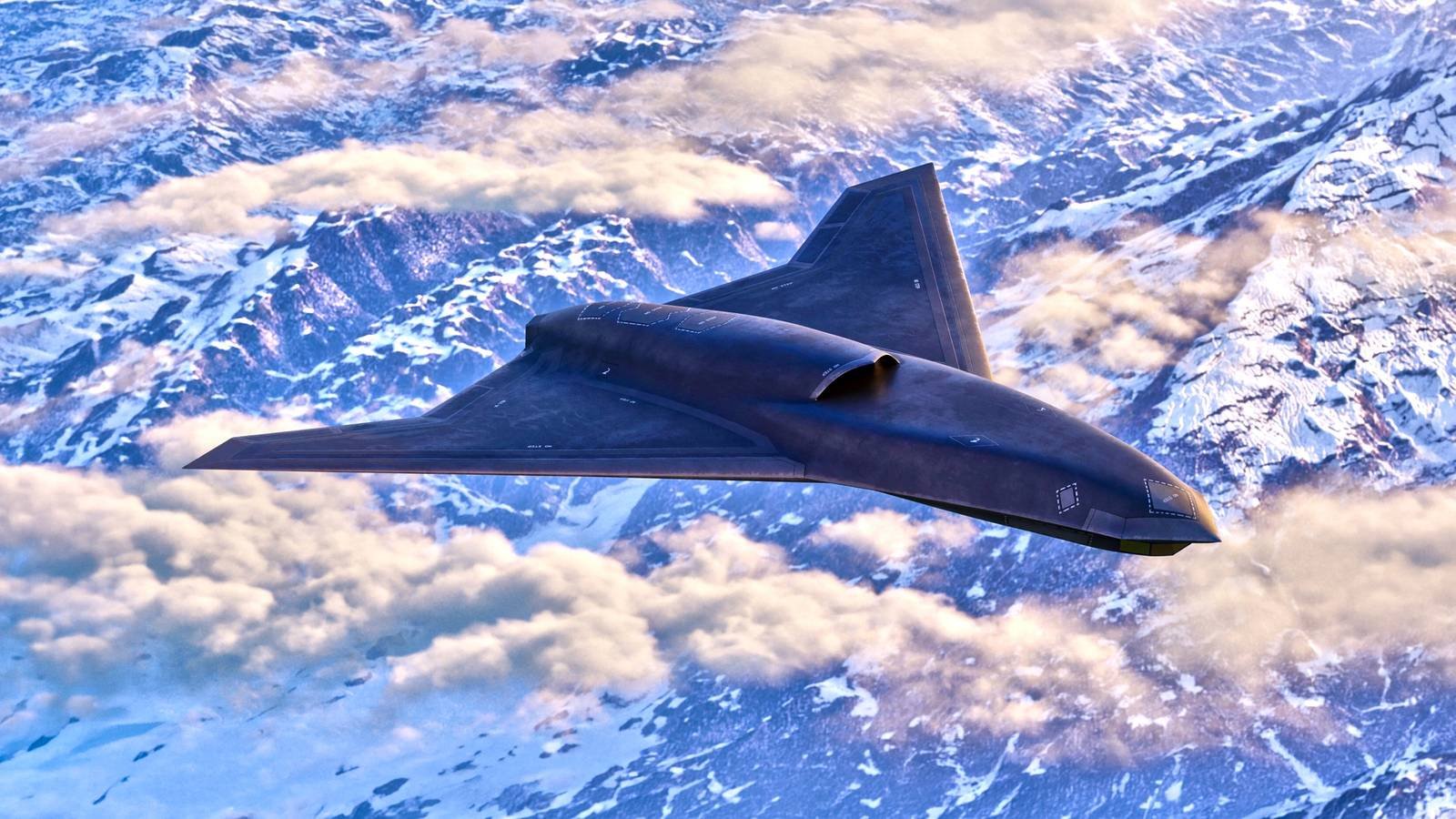
The Ascendance of the Boeing F-47: A New Era in Air Dominance
In the sprawling skies above the United Arab Emirates, where ambition meets innovation, the future of aerial combat is being sculpted with meticulous precision. The upcoming Boeing F-47, a sixth-generation fighter jet, is poised to redefine aerial warfare, emerging as a pivotal element of the Next Generation Air Dominance (NGAD) program. Unlike its predecessors which soared alone, the F-47’s role transcends traditional paradigms; it will function as a command center, orchestrating operations alongside advanced Collaborative Combat Aircraft (CCA)—sophisticated loyal wingmen designed for a new era of warfare.
As the United States Air Force propels its vision into reality, two pioneers have stepped into the limelight: the Anduril YFQ-44A and the General Atomics YFQ-42. Yet upon inspection, these vessels may appear incongruous against the backdrop of the F-47’s cutting-edge, supersonic, all-aspect stealth capabilities. However, designs like the Lockheed Martin Vectis emerge as potential companions, enhancing the F-47’s capabilities with their advanced functionalities.
CCAs: Crafting the Future of Combat
Even as the YFQ-44A embarks on its production journey at Anduril’s state-of-the-art Arsenal 1 facility, the overall architecture of the CCA program continues to take shape, a tapestry woven from new doctrines and aircraft types. Essential to this evolution are the varying capabilities mandated by the Air Force to pair these drones with the magnificent F-22 and F-35, scheduled to take to the skies in 2029.
As the initial Increment of the CCA program unfolds, tantalizing discussions surround the decisions made by the US Air Force. Aldering its ambitions, the service set aside the extravagant Lockheed Martin prototype in favor of the more pragmatic yet high-performing demonstrators—having opted for designs that promise efficacy over opulence.
The Evolution of Speed: Navigating Increment 1
As an emblem of rapid development, Increment 1 prioritizes speed over comprehensive optimization. Rolls-Royce, a titan in aerospace engineering, plays a crucial role here, championing its AE 3007 and the newly minted Orpheus engines for future CCAs. Senior Vice President Kaare Erickson alluded to a pivotal shift during Increment 2, corresponding to a broadening of operational priorities, especially as the Air Force focuses on mitigating the vast distances of the Indo-Pacific theater.
During this stage of evolution, pertinent questions will arise about range, payload, power, and survivability—an essential metamorphosis for the YFQ-44 and YFQ-42, which were birthed in an atmosphere of urgency to serve existing platforms. Future iterations will push boundaries further, evolving alongside the F-47 as it embarks on its journey in the early 2030s.
Lockheed’s Vision: Redefining High-End CCA
Within this bold landscape of innovation, Lockheed Martin remains unwavering in its vision, fostering the belief that a high-end CCA will be essential, albeit not exclusive of lower-tier aircraft. The Lockheed Martin Vectis, designed for seamless integration with crewed platforms like the F-35, embodies this forward-thinking ethos, proclaiming affordability while embracing the intricacies of advanced aerial warfare.
Yet, as designs materialize, certain constraints come into focus. The Vectis and its contemporaries are envisioned to operate below supersonic thresholds, challenged by the intimidating air speeds of their fighter counterparts.
The F-47: A Generational Leap in Air Combat
Anticipation builds around the F-47, not merely a fighter, but a harbinger of a new age. Boasting a combat radius anticipated to exceed 1,000 nautical miles, its design is a balletic blend of stealth, agility, and power—aimed squarely at countering adversaries with expansive reach. However, precise characteristics continue to be shrouded in mystery, tantalizing military strategists and aviation enthusiasts alike.
Crucially, the modern battlefield’s dynamic necessitates that the F-47 be complemented by high-performing CCAs, pushing innovation boundaries while grappling with the need to remain cost-effective.
Affordability: The Balancing Act of Power and Practicality
In the delicate dance between steak and sizzle, the question of affordability forever echoes. The F-47’s development and production are strategically capped, with only around 185 anticipated to grace the skies. This limitation signifies its role at the zenith of the Air Force’s strategic spear, reinforcing that prowess must coexist harmoniously with fiscal prudence.
As the realm of CCAs expands, the Air Force faces the intricate task of refining capabilities while meeting financial constraints, a challenge that requires astute decisions and visionary foresight.
In the audacious ambition of its next-generation fighter, the United States strives to secure air dominance, harnessing collaborative technologies that resonate with innovation and evolution. The Boeing F-47 is not merely an aircraft but a testament to the artistry of engineering, a masterpiece set to soar through the storied skies of tomorrow.