
Elevating Aerial Journeys: Navigating the Divide in Luxury Travel Experiences
In an era marked by an astonishing transformation in the realm of air travel, where the allure of high-tier options captures the imagination of discerning globetrotters, the question remains: does the premium price tag for top-tier tickets justify their lavish offerings? As the contours of luxury travel have dynamically shifted over the past decade, so has the dialogue surrounding its merit, particularly among those who traverse the skies with frequency.
On short domestic excursions, distinctions between classes may appear subtle, often confined to the mere luxuries of a broader armrest or an additional complimentary treat. However, as we embark on transcontinental odysseys, those fleeting upgrades unfurl into experiences and results that are undeniably remarkable. This comprehensive guide seeks to delineate the boundaries between economy and luxury, offering a lens through which the practical realities of high-end commercial aviation can be examined.
The epitome of comfort, the lie-flat seat, was historically the crowning achievement of premium air travel. Yet, in our modern age, commercial airlines have broadened their cabin offerings, allowing this coveted luxury to permeate long-haul fleets across the industry. Today, the true challenge for carriers lies in cultivating an experience that transcends the basic notion of a seat, morphing it into an oasis that mirrors the comforts and aesthetic pleasures of a hotel room suspended amidst the clouds.
How then, can we discern the nuances that still exist between business and first class travel?
To grasp the essence of premium travel, one must first understand what happens amidst the opulent enclosures of high-tier cabins.
Where Comfort Meets Exclusivity
In this evolving narrative of aviation wellness, the design and architecture of business class seating have witnessed a renaissance, prompting visionary designers to reconsider every aspect of cabin space. Ideally, today’s international business class configurations guarantee direct aisle access and fully flat beds as industry standards. With comfort no longer a luxury but an expectation, airlines must now seek innovative ways to elevate their offerings beyond the expected.
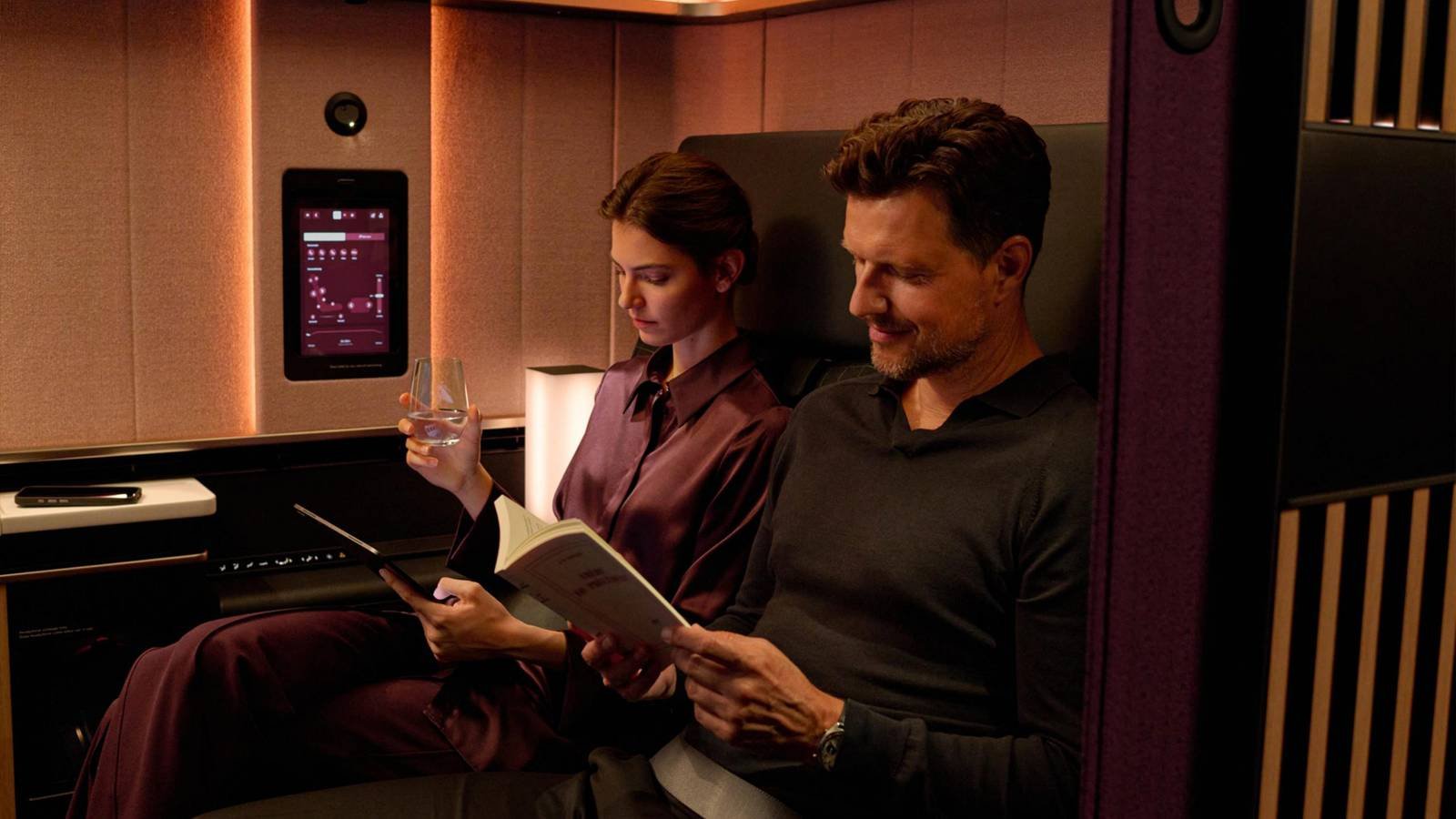
Many leading airlines have embraced a strategy focused on exclusivity, opting for lavish cabin designs featuring full-height closing doors and modular suite layouts to create an enviable atmosphere reminiscent of the highest echelons in hospitality. Iconic models such as Qatar Airways’ Qsuite and ANA’s The Room have introduced innovative sliding privacy partitions, yet the distinction between premium and elite cabins pivots on the ratio of space allocated to each passenger. In these carefully curated spaces, elite first class offerings—such as those aboard Emirates’ majestic Airbus A380—foster a tranquil ambiance with only 14 enclosed suites, each attended to by an intimate crew of attentive professionals, culminating in an exquisite 1:2 crew-to-passenger ratio.
This delicate spatial contrast profoundly influences the tailored attention a passenger receives throughout their journey. In contrast, the business class cabin, bustling with approximately 40 to 76 suites on the same flight, translates to a more structured service environment, a far cry from the tranquil, highly personalized experience afforded in the premium cabins.
Culinary Freedom: Dining at Your Leisure
The gastronomic experience is yet another arena where the luxury of choice reigns supreme. Onboard a standard business class cabin, meals are orchestrated and delivered on a strict timeline, serving dozens with precision but often rendering the culinary adventure a shared endeavor. While the quality is predictably high, the rigidity of meal service fails to accommodate the unpredictable rhythms of travel fatigue and jet lag.
However, true luxury travel dismantles this antiquated model, ushering in a refined dining-on-demand experience that empowers guests to indulge at will. Those fortunate enough to occupy the upper echelon of premium clients possess the autonomy to orchestrate their dining experience, calling upon highly skilled onboard chefs to prepare sumptuous multi-course meals when they desire. Here, the beverage offerings transcend standard labels, embracing rare vintages and delectable presentations of caviar that transform dining into a bespoke affair.
For the international traveler, the utter control over sleep and nutrition often stands as the most compelling rationale for opting for a premium ticket. Instead of rising to the disturbances of communal breakfast service, discerning travelers can luxuriate in uninterrupted rest, selecting to dine moments before arrival. This personalization transcends mere comfort; it transforms the journey into an extension of everyday life—a seamless flow of wellness within the sky.
The Executive Haven: A Preflight Experience Like No Other
Long before the aircraft’s engines hum to life, the premium experience reveals itself through unparalleled exclusivity at the airport terminal. Business class travelers gain access to expedited security lines and dynamic premium lounges that, although lavish, often teem with high foot traffic reminiscent of the main concourse. At the pinnacle of the market lies a luxury rarely experienced—the private terminal offerings.
Consider Lufthansa’s extraordinary First Class Terminal in Frankfurt, an awe-inspiring enclave separate from the airport chaos, boasting dedicated immigration personnel, serene sleeping quarters, and culinary delights curated amid an atmosphere solely devoted to tranquility.
Rather than blending with the hive of ordinary travelers, elite passengers are whisked effortlessly across the tarmac in luxurious vehicles, cresting an experience that seamlessly connects land to air in splendid privacy.
The Reality Check: Are Premium Cabins Disappearing?
While predictions of the demise of traditional elite cabins circulate, the demand from ultra-high-net-worth individuals has preserved the allure of luxury air travel. Forward-thinking airlines recognize the irreplaceable value of this niche market, opting to reduce cabin size while simultaneously amplifying the luxury quotient. Future designs point towards intimate configurations of just a few spacious apartments, allowing airlines to cater to an exclusive audience unwilling to mingle with the masses.
The realm of high-end travel will continue to adapt, yet the dissimilarities between premier and business travel—the exquisite nuances—invariably expand. As long as airlines uphold their commitment to craft private, insulated ecosystems in air travel, the pinnacle of luxury will persist, a reverent reminder that true extravagance thrives not merely on opulence, but on the exquisite control it grants the traveler.
Through this lens, one finds that the divide, while significant, also serves as an invitation to indulge in the splendors that luxury travel offers—an odyssey of unparalleled beauty where every detail has been envisioned for the discerning traveler who simply refuses to settle for anything less than extraordinary.