
The Synergy of Flight: Exploring the Evolution of American Naval Aerial Might
As the dawn of a new era in maritime aviation unfolds, the United States Navy embarks on an ambitious journey, brilliantly blending legacy with innovation. Reflecting the relentless pursuit of excellence, the Navy’s air wing evolves with the introduction of remarkable strike fighters that redefine the landscape of aerial combat.
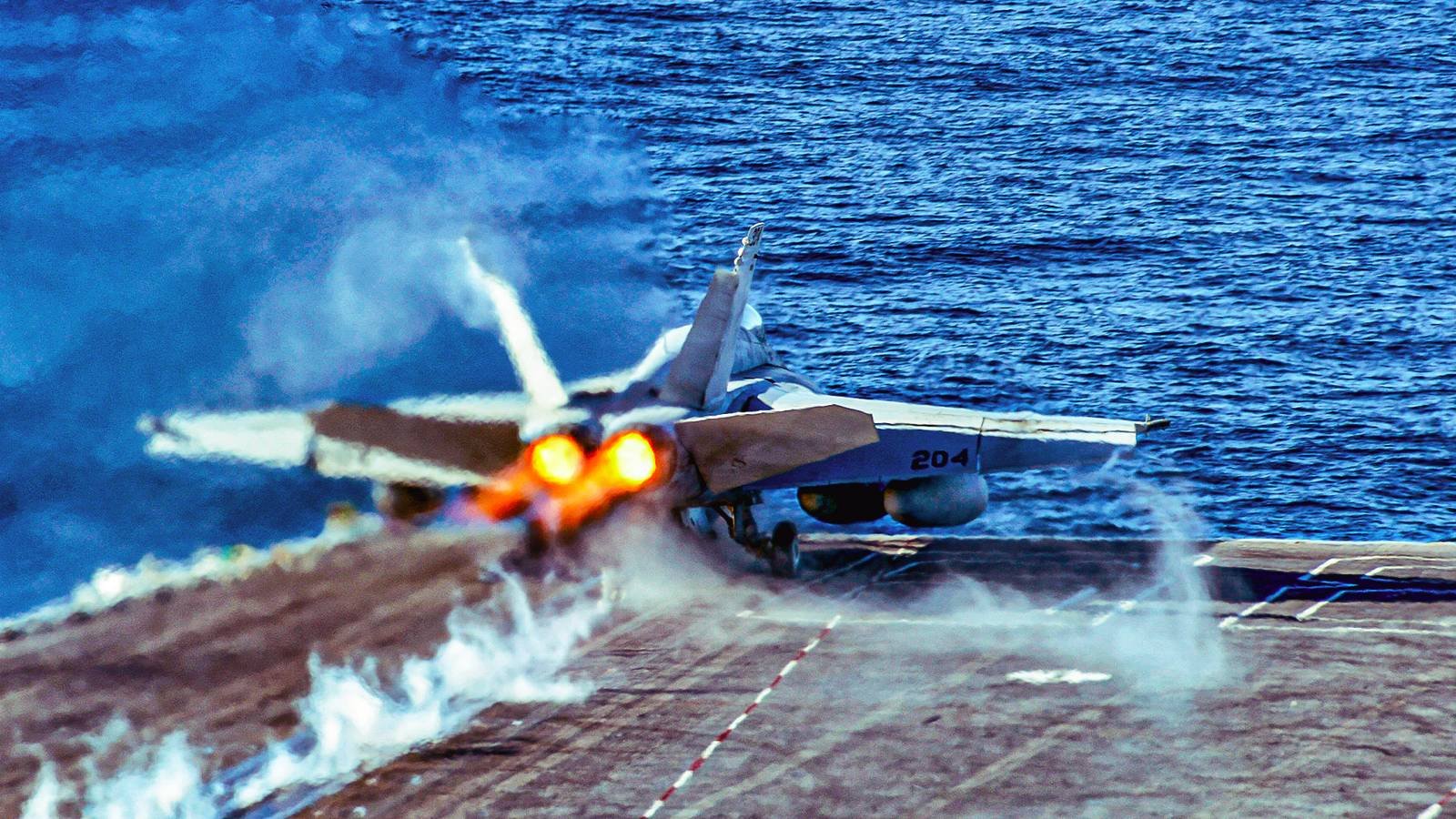
With the debut of the exquisite F-35C Lightning II into the distinguished fleet in 2019, the Navy commenced the intricate process of crafting its advanced mixed fleet of ‘high-low’ fighters. As the sleek, stealthy Lightning II graces the skies, its stalwart companion, the Boeing F/A-18E/F Super Hornet, remains an indispensable workhorse, epitomizing reliability and multifaceted prowess.
In the grand theater of naval operations, these aircraft harmoniously coexist, their complementary capabilities elevating the overall efficacy of the carrier strike group. The Super Hornet, revered for its versatility over myriad missions, now finds itself gracefully ushered into a new chapter, where its rich history as the premier fighter is lovingly entwined with the modern magic of the F-35C. As the Lightning II leads the charge into contested airspace, identifying and neutralizing threats with surgical precision, the Super Hornet bravely strides onward, prepared to unleash a formidable wave of aerial bombardment.
In the seamless choreography of aerial warfare, the Super Hornet continues its role, a steadfast guardian and powerful ally amidst a landscape rich with evolving threats. The introduction of the F-35C transforms the air wing from a collective of isolated strike platforms into an interconnected web of intelligence and firepower. This intelligent synergy allows the F-35C to map the battlefield invisibly, delivering crucial data to its brethren without betraying their positions with active radar emissions.
As the Navy stands poised to usher in a new era of aerial supremacy, the F-35C soars, its capabilities emblematic of a modern age of warfare. Within its sleek fuselage lies the sophistication of revolutionary technology: advanced sensors, relentless stealth, and the unparalleled ability to guide heavy munitions from miles away, synchronizing effortlessly with the laden Super Hornet.
In a world where precision matters, a delicate balance exists; while the F-35C is firmly anchored in stealth, the Super Hornet blooms, wielding exquisite ordnance with unapologetic bravado. Together, these aircraft are akin to two blades of the same sword, each performing distinct yet interrelated duties that enhance the overall efficacy and lethality of the Navy’s air wing.
The prized F/A-18E/F Block III, with a price tag hovering around $66 million to $75 million per unit, demonstrates the stability and maturity of Boeing’s productions, a finely-tuned engine of efficiency. Meanwhile, with a baseline F-35C priced at an estimated $100 million and poised for enhancements in technology refreshes, it artfully denotes the marvels and complexities inherent to modern joint strike capabilities.
As aerial operations evolve, embracing ground-breaking technologies and fueling the Naval vision, the MQ-25A Stingray emerges as the leading luminary of future naval aviation. This innovative solution, designed to bridge the refueling gap, liberates traditional fighter aircraft from auxiliary tasks, unveiling a spectrum of operational advantages while maximizing available combat power. The Stingray’s remarkable adaptability places it at the forefront of manned-unmanned teaming, crafting a new narrative in the annals of aerial warfare.
As we engage in this meticulously engineered transformation of American naval aerial forces, we celebrate the marriage of tradition with the avant-garde. The stage is set for an inspiring future, where legacy meets innovation, and every flight becomes a testament to human ingenuity, seamlessly integrated into the broader tapestry of maritime dominance.
In this milieu of opulence, ambition, and unmatched sophistication, the Navy’s air wing stands ready—not merely as instruments of destruction but as sophisticated harbingers of a secure tomorrow, heralding a future where the skies resonate with unity, precision, and unparalleled prowess.