
The Reflections of Controversy: A Closer Look at the Lincoln Memorial Reflecting Pool
In the very heart of America’s capital lies a shimmering body of water, the Lincoln Memorial Reflecting Pool—an iconic expanse of beauty that has drawn multitudes to its hallowed shores. Recently, however, this picturesque homage to one of the nation’s greatest presidents has become mired in a discourse of disillusionment and upheaval, a situation compounded by allegations of vandalism that threaten to sour its tranquil essence.
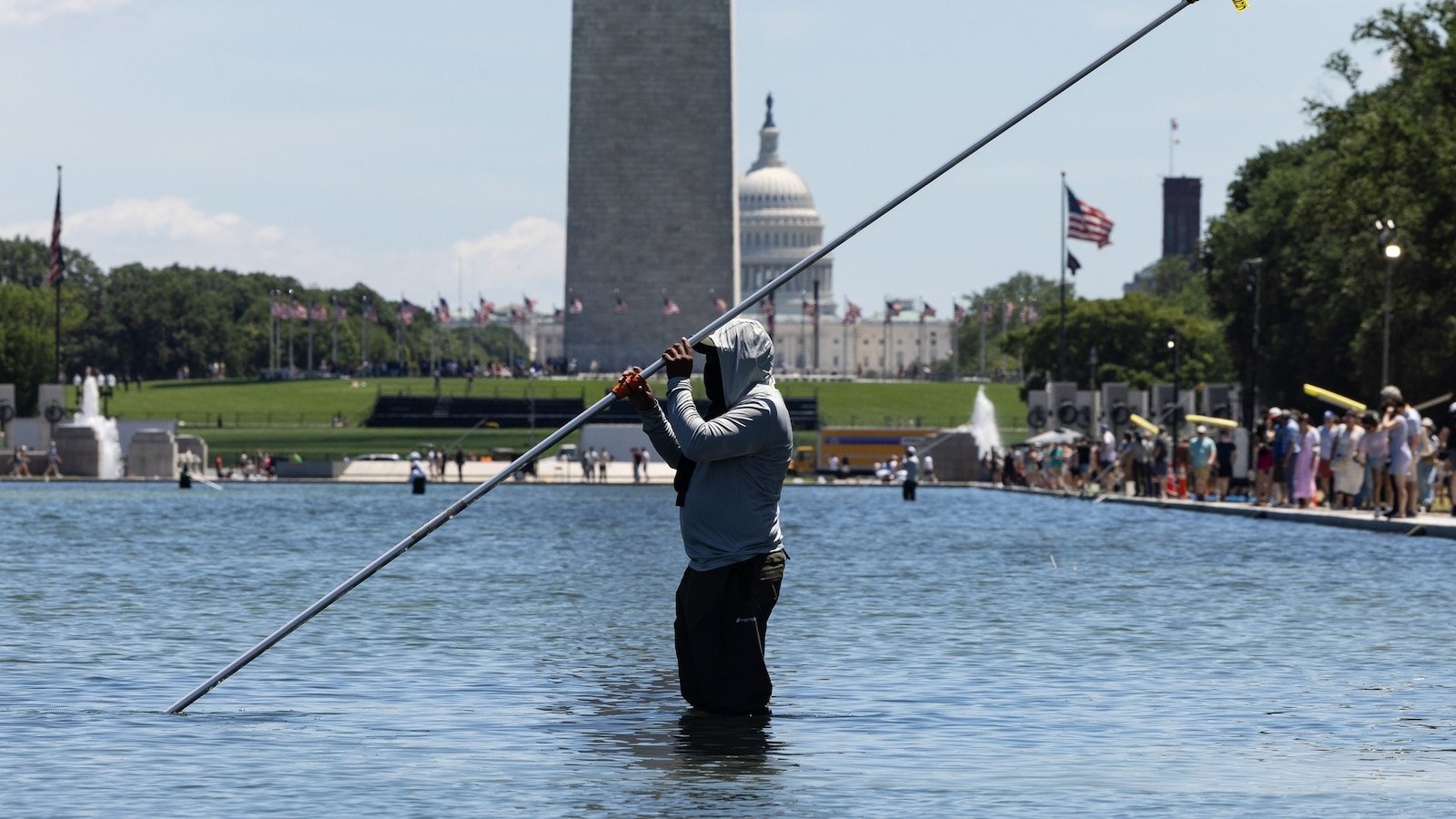
As visitors meander along the marble pathways, their footsteps echoing in the resonant silence of history, they are met not only by the reflective waters but also by an unnerving spectacle of algae and peeling paint—a stark juxtaposition against the grandeur that underscores the essence of this significant monument. An alarming revelation from the announcement shared by President Trump denotes that multiple individuals were apprehended, accused of defacing this revered site, a reality that has sent ripples of outrage throughout a community deeply rooted in cultural reverence.
Nestled amidst a backdrop of social media frenzy, images of the pool seem to tell a story of their own, depicting an environment once polished to perfection now wrestling with the elements and human actions. The recent renovation, which boasted a lavish investment exceeding fourteen million dollars, has faced ridicule as concerns over its integrity surface. This costly endeavor has seemingly fallen prey to the very forces that it sought to remedy, overshadowing the labor of love and precision that was intended to enhance its charm.
Amidst the swirling clouds of controversy, the perception of vandalism has transformed into a cauldron of heated debate. Trump, in his fervent proclamations, has cast a shadow upon those accused, claiming their actions to be insidious and warranting severe consequences. As the narrative unfolds, one cannot help but reflect on the profound essence of monuments—their purpose to inspire unity, admiration, and respect for the past—and how fragile that foundation can be when faced with unrest.
The debate surrounding the circumstances of this predicament deepens as the U.S. Park Police remain curiously silent. Questions almost seem to hang in the air, as spectators and historians alike bear witness to a spectacle that intertwines the splendors of history with modern-day confrontations. The very fabric of the Reflecting Pool—once a symbol of serenity—is now a microcosm of societal challenges, fraught with emotion and contrasting views of loyalty, integrity, and stewardship.
As the sun sets behind the Lincoln Memorial, casting long shadows across the Reflecting Pool, we are confronted with a poignant reminder that even the most noble structures are not impervious to the tides of human action and intention. It is a critical juncture, a moment that calls for introspection, as we navigate the nuances of legacy, preservation, and the ongoing dialogue between history and the present.
Let us aspire to honor the sanctity of such revered monuments—not only with our votes, but with grace and responsibility, ensuring that future generations inherit not just history, but the lessons it imparts.