
Authority and Independence: A Landmark Assertion in the Realm of Financial Governance
In a notable corridor of power and jurisprudence, the U.S. Supreme Court has momentarily halted President Donald Trump’s audacious endeavor to dismiss Federal Reserve Board member Lisa Cook. This unprecedented action, propped by allegations of gross negligence and devoid of formal recourse for Cook to address her accusers, marks a pivotal moment in the delicate dance between governance and independent oversight.
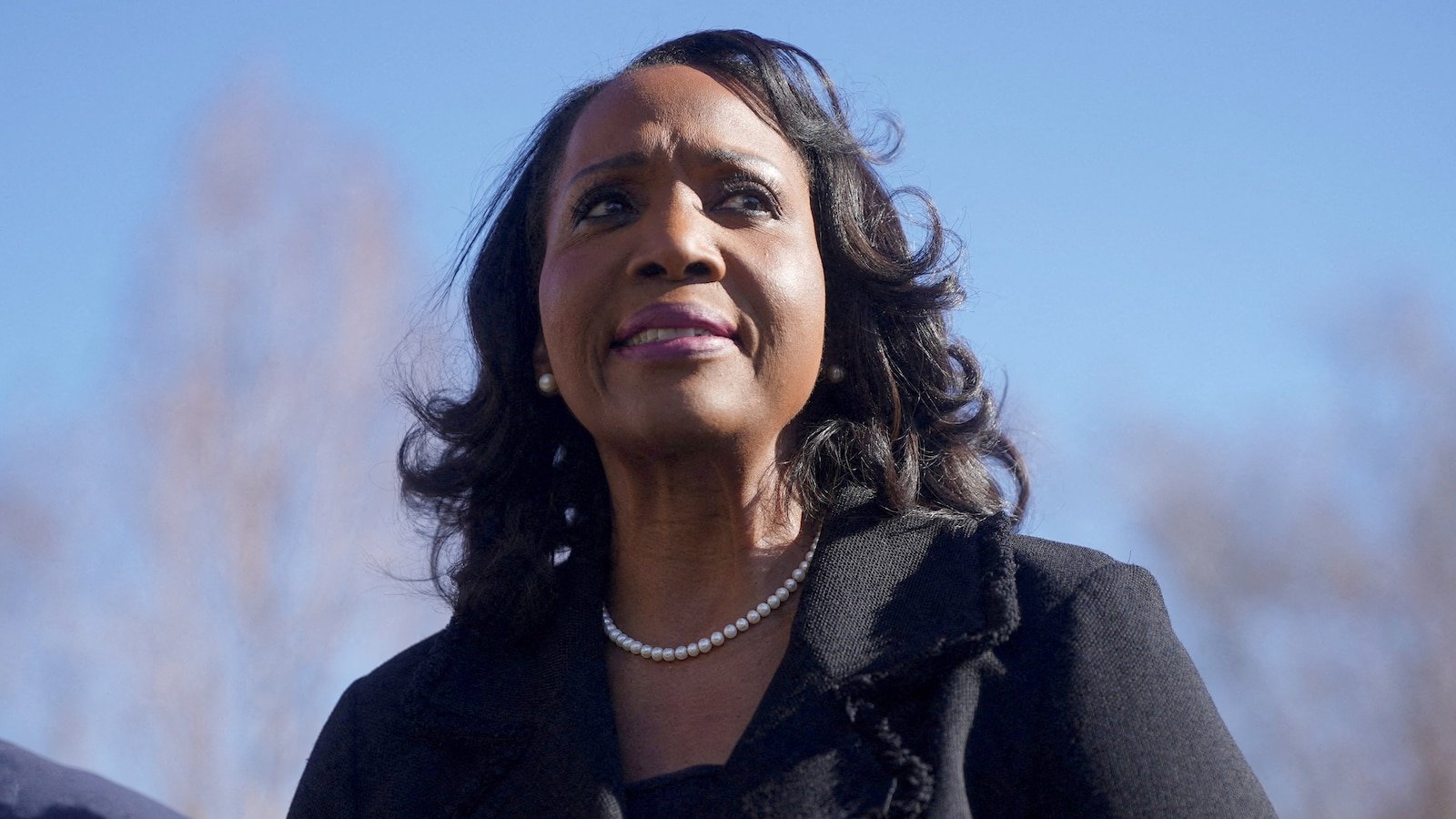
Cook, the trailblazing first Black woman to grace the central bank’s advisory committee, will retain her prestigious position, which extends over ten years remaining in her fourteen-year tenure. With a quiet but undeniable strength, she stands as an embodiment of progress within a traditionally monochromatic institution, her plight intricately woven into the fabric of the Fed’s history.
While the court has often acknowledged the expansive powers wielded by a president over the executive branch, it has drawn clear boundaries when it comes to the Federal Reserve, an entity steeped in a history of autonomy, ostensibly insulated from the whims of White House machinations.
The heart of the legal contention rested on the interpretation of "cause" as defined by federal law, delineating what justifies a president’s prerogative to remove a governor. The essence of Trump’s appeal was a compelling inquiry: Who carries the mantle of decision in such matters, and what form of due process is afforded?
In a call to arms for unchecked power, Trump asserted that allegations levied by Federal Housing Finance Agency Director Bill Pulte against Cook—accusations entwined in the complexity of mortgage fraud—served as adequate grounds for her ousting.
Specifically, the president accused Cook of improperly designating a secondary residence as her primary home to secure favorable loan terms. This assertion, however, hangs in the balance of scrutiny, as the Justice Department initiates a criminal investigation, probing the intricacies of the case.
Cook, undeterred by the tempest swirling around her, has staunchly refused to resign, her attorneys vehemently contesting that parsing one outlier reference within a 2021 mortgage document amounts to little more than a pretext for a politically motivated orchestration aimed at undermining the Fed’s policy board.
As the court navigated this intricate tableau, it primarily focused on Trump’s request for a stay on a lower court’s ruling allowing Cook to retain her position while legal challenges unfold—managing a case that remains delicately poised within a preliminary framework, grappling with yet-unexamined legal or constitutional disputes.
The court’s decision resonates as a triumph for the sanctity of the Federal Reserve’s independence, at least for the time being—an assertion against the backdrop of Trump’s extraordinary ambition to recalibrate the central bank’s directional compass.
As this narrative continues to unfurl, the implications reverberate through the corridors of power, echoing the timeless struggle for integrity and autonomy within the echelons of financial governance.
(This story is evolving. We invite you to stay engaged for further developments.)