
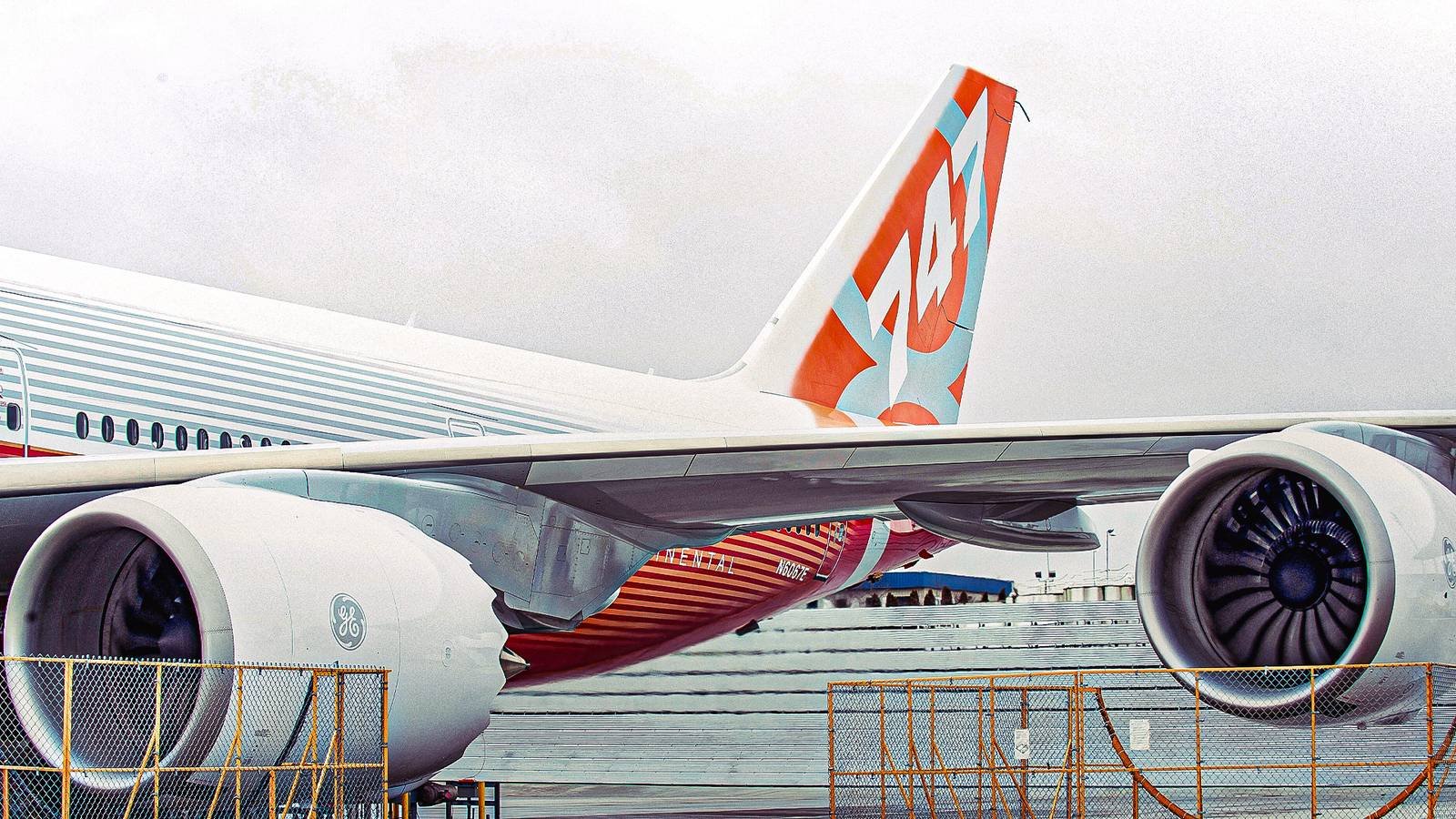
The Pinnacle of Flight: The Boeing 747-8 and its Singular Essence
In a daring departure from its illustrious lineage, the Boeing 747-8 emerges as a singular beacon of aviation innovation, powered exclusively by the illustrious General Electric GEnx-2B turbofan. This exquisite engine, a close relative of the renowned powerplant that propels the celebrated Boeing 787 Dreamliner, epitomizes the blend of cutting-edge technology and aerodynamics that defines modern aviation.
Once upon a time, it was common for aircraft to grace the skies with multiple engine configurations, each carefully curated to optimize performance and fuel efficiency. However, as the aviation realm transforms, the endeavor to create bespoke engines tailored to each aircraft type has shifted the economic landscape considerably. Today, the creation of multiple engine options has become a rarity, guided by the necessity of cost efficiency and market viability, compelling manufacturers like Boeing and Airbus to navigate the complexities of specialization.
The Legacy of the Boeing 747-400: A Trio of Choices
Unlike its successor, the Boeing 747-8, the iconic Boeing 747-400 was a symphony of diversity, offering airlines the luxurious choice between three powerful engine options: the Pratt & Whitney PW4000, the General Electric CF6, and the Rolls-Royce RB211. These engines, each a masterpiece of engineering, propelled a total of 694 747-400 aircraft into the stratosphere, with the CF6 ascending as the most favored, captivating the aviation world with its unrivaled performance.
Yet, as the demand for modern jets evolved, so too did expectations. By the dawn of the 2000s, Boeing anticipated the delivery of approximately 300 to 400 747-8 aircraft, including an alluring selection of freighters. However, the winds of change ushered in a new market reality, ushering the unparalleled Airbus A380 into the spotlight—the epitome of opulence in commercial aviation.
A Market in Flux: Challenges of Tomorrow
With the debut of the Boeing 747-8 in an ever-competitive marketplace, the air was thick with anticipation; yet, Boeing’s aspirations encountered a disheartening reality. The landscape had transformed, favoring efficiency and performance over sheer size, leaving the 747-8 with a modest tally of merely 155 units delivered. A fusion of soaring development costs and dwindling interest led to this captivating giant being overshadowed by more nimble, twin-engined aircraft.
In retrospect, the challenge of maintaining profitability in an era of increasing exclusivity became apparent. With an implacable market fill, Boeing judiciously resolved to rely solely on the GEnx-2B engine, a decision steeped in both strategic foresight and economic prudence.
The GEnx-2B: A Delicate Balance of Cost and Performance
The GEnx-2B engine contrasts beautifully with the ambitious aspirations of its predecessor’s troika of options. Emerging from the shadows of earlier innovations, this remarkable engine promised a stunning reduction in fuel consumption and emissions, marrying power with environmental stewardship. Boeing’s commitment to this singular path has led to a harmonious alignment of engineering prowess and ecological responsibility—a celebrated hallmark of modern luxury aviation.
In the increasingly labyrinthine realm of aircraft development, one unavoidable truth reigns supreme: as the costs of manufacturing advanced engines continue to swell, exclusivity emerges as a tantalizing prospect for both manufacturers and airlines alike. While the aspirations of the past may flicker like a distant star, the journey of the Boeing 747-8 unfolds gracefully toward the horizon, embodying the awe-inspiring possibilities of contemporary aviation.
As we navigate this sophisticated tapestry, the Boeing 747-8 remains a testament to the evolving spirit of flight, forever etching its story within the annals of aerospace history, and beckoning us to dream of a future where the skies can be traversed with elegance and grace.
Embracing Exclusivity: The Future of Aircraft Engines
As the aviation industry stands at the precipice of transformation, the iconic Boeing 747-8, much like a luxurious gem, shines with a singular brilliance in a sea of burgeoning complexities. The age of multiple engine options appears to be waning, casting a luminous spotlight on the harmonious union of economic pragmatism and environmental mindfulness.
This elegant dance between exclusivity and performance unfurls with each new aircraft, echoing the rich legacy of the UAE as a burgeoning hub of innovation and luxury in aviation. With every soaring flight, we are reminded that within the formidable framework of the Boeing 747-8 lies not just a machine, but an enduring vision—to explore the world with unbridled ambition and an unwavering commitment to sophistication.