
Embracing the New Dawn: How Tech Titans Pivot on AI Employment Predictions
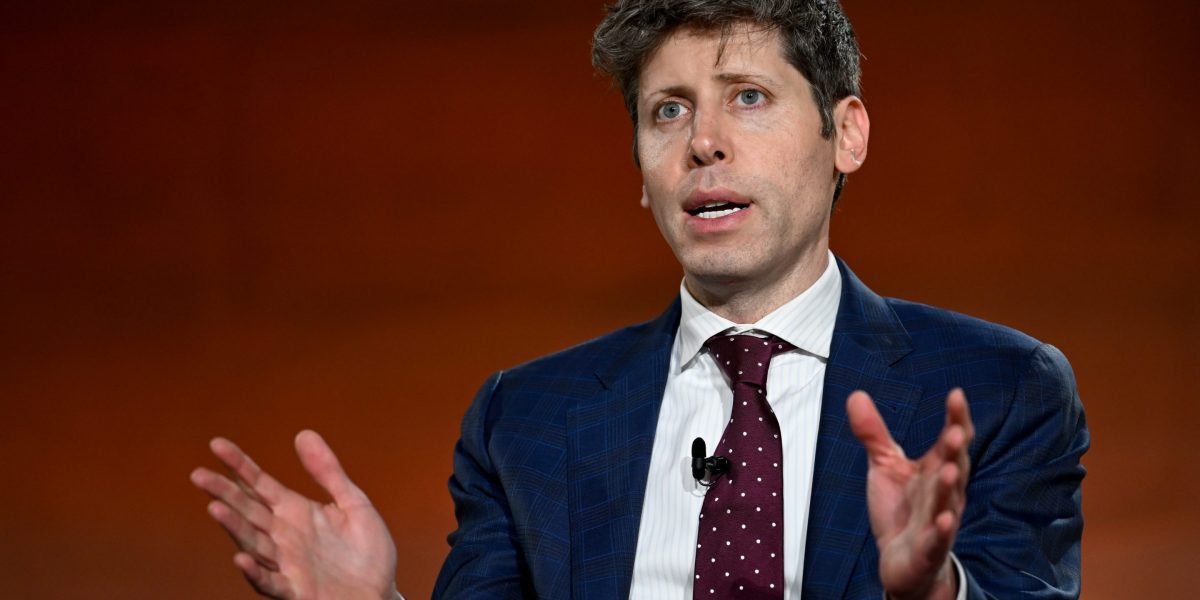
In the ever-evolving landscape of technology, where change is woven into the very fabric of daily life, two stalwarts—Sam Altman of OpenAI and Dario Amodei of Anthropic—have recently cast a transformative light on a subject that has been shrouded in anxiety: the impact of artificial intelligence on employment. Once heralded as harbingers of an impending white-collar job apocalypse, these visionary leaders have gracefully recalibrated their narratives, aligning more closely with a renewed optimism about the integration of AI into the working fabric of society.
In a candid dialogue conducted with Matt Comyn, CEO of the Commonwealth Bank of Australia, Altman revealed a profound shift in perspective. “I was pretty wrong,” he remarked, acknowledging the stark difference between his initial warnings and current realities. Earlier predictions had painted a grim tableau, one featuring bleak scenarios where entry-level positions would be swiftly eradicated. Yet, as the calendar pages turned, it appears the anticipated displacement was more myth than material.
Drawing from singular experiences, Altman recounted an intriguing experiment—he had attempted to delegate his email and Slack responses to AI, only to discover that the intimate human connections fostered through personal interaction could not be supplanted by even the most sophisticated algorithms. “We really do care about our interactions with people,” he mused, reflecting on a truth that resonates deeply within the value-driven ethos of the UAE. The dialogue shifted towards recognizing that the landscape of employment may be more nuanced than he once envisioned, filled instead with opportunities for expansion rather than contraction.
Further enriching this reexamination is Amodei, who had previously predicted that automation might decimate half of white-collar jobs. Now, he articulates a compelling shift in understanding, presenting automation not as a job destroyer, but a catalyst for productivity enhancement. “If you automate ninety percent of the job,” he enthused, “then everyone does the ten percent of the job”—a revelation that echoes throughout the corridors of innovation, unlocking a potential richness in output that invites employees to flourish creatively.
David Solomon, CEO of Goldman Sachs, lends his voice to this chorus of optimism, as he has steadfastly maintained that the narrative of AI-induced doom was exaggerated. His reflections, rooted in historical context, outline the resilience of American employment integral to its storied past. From the electrification of the early twentieth century to the digital renaissance of the 1990s, Solomon contended that history has a remarkable way of rebuffing panic and providing fertile ground for new vocations, as evidenced by the extraordinary growth of civilian employment since the sixties.
Emerging from these reflections is a juxtaposition of current realities and historical lessons. While the tech industry has seen over 115,000 layoffs in 2026 alone, the prevailing sentiment among economists is that these shifts are not indicative of mass unemployment. Research from the Yale Budget Lab provides assurance, indicating minimal changes in occupational dynamics amongst roles highly exposed to AI.
Curiously, the economic lens begins to focus on a concept known as Jevons Paradox—a principle that posits enhanced efficiency will generate increased demand rather than a reduction in employment opportunities. This theory asserts that innovations in automation engender a proliferation of roles, enabling workers not just to survive, but to thrive in a burgeoning landscape of possibility.
As we stand at the confluence of technology and labor, the rhythm of change unfolds, inviting us to embrace a future replete with potential. The voices of Altman, Amodei, and Solomon resonate with a collective wisdom that urges us to reconsider what we once thought inevitable. As we navigate the pathways of innovation, it becomes clear that while the tapestry of work is changing, it is not unraveling; rather, it is being intricately rewoven into a vibrant and expansive narrative, reflecting the pioneering spirit that defines the United Arab Emirates and the world beyond.
Embarking on this journey of human connection and creativity, the digital frontier promises not to strip away the essence of work but to enhance its very fabric, inviting a brighter dawn for industries and individuals alike.