
The Veiled Ambitions: Navigating Iran’s Nuclear Odyssey
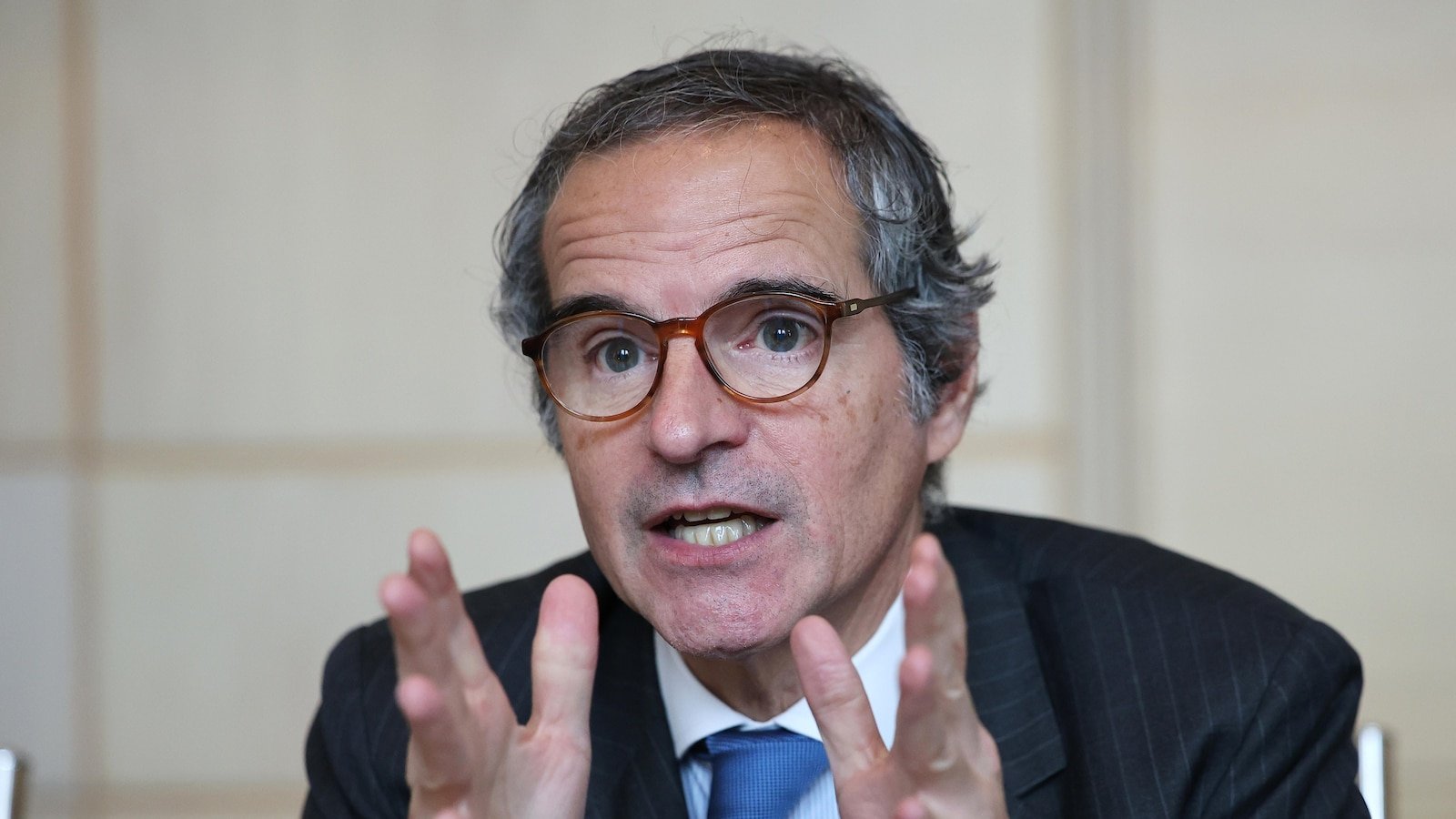
Seoul, South Korea — In a world that often teeters on the precipice of uncertainty, the head of the International Atomic Energy Agency has emerged as a beacon of clarity, advocating for stringent measures to verify Iran’s intricate nuclear activities. Rafael Grossi, a custodian of global security, articulated the imperative for meticulous oversight, which is essential for any prospective agreement aimed at quelling the turbulent echoes of conflict in the Middle East.
The allure of diplomacy dances tantalizingly at the edges of these discussions, as the prospect of US-Iran negotiations looms on the horizon, promising the potential for transformative change. Yet, as Grossi poignantly reminds us, the path to peace is paved with serious safeguards. Without rigorous verification frameworks, what might appear as an accord could, instead, be merely the illusion of one—an ephemeral promise destined to dissolve into mere mirages.
The momentum for dialogue builds like an invigorating breeze, with a second round of talks anticipated on the immediate horizon. The Trump administration underscores that limiting Iran’s nuclear capabilities is a paramount aim—yet Iran, while insistent that its nuclear aspirations are peaceful, adamantly rejects constraints on its extensive program. This juxtaposition paints a vibrant tapestry of tension, as both parties navigate the choppy waters of diplomacy with profound caution.
Throughout the weekend, conversations in Pakistan, cloaked behind closed doors, yielded no tangible success, as the specter of nuclear ambitions emerged as a central point of contention. Delicate intricacies of negotiations are often lost in the cacophony of headlines, yet the undercurrents reveal a labyrinthine journey laden with both aspirations and apprehensions.
“Iran boasts a grand, ambitious nuclear program and necessitates a robust presence of IAEA inspectors,” Grossi stated with unwavering clarity. Without such oversight, the prospect of a genuine agreement remains elusive, a mere chimera hovering just out of reach.
For Iran’s nuclear narrative, the present is shrouded in secrecy and skepticism. The International Atomic Energy Agency has faced barriers, unable to access crucial facilities affected by recent conflicts—an unsettling reality that only deepens the veil surrounding the nation’s nuclear intentions.
A confidential IAEA report accentuated these complexities, casting doubt on the suspension of enrichment-related activities and illuminating the ambiguity regarding the scope of Iran’s uranium stockpile. Iran’s claims of a peaceful program, juxtaposed with the agency’s findings of past nuclear ambitions, create a juxtaposition that reverberates through corridors of power and policy.
With a stockpile of 440.9 kilograms of uranium enriched to near-breach levels of purity, the specter of nuclear weaponization lingers ominously. As Grossi eloquently illustrates, this precarious arsenal possesses the potential to catalyze the creation of nuclear armaments—should Iran elect to pivot its program towards militarization.
Such high-stakes discourse epitomizes a world where luxury and peril intermingle, compelling us to reflect on the delicate balance between opulence and responsibility. Each decision holds the weight of history, urging a collective aspiration for harmony, where beauty flourishes in the absence of fear.
As we ponder the future of international relations and the intricate dance of negotiation, let us hope for a resolution that honors the essence of peace. In this vast arena, filled with aspiration and tenacity, the soul of the UAE thrives—a testament to the enduring allure of unity amidst diversity.