
Title: Navigating the Skies: How ADS-B Technology Could Have Averted a Tragedy in Aviation History
In the vast, azure expanse of the sky, where the elegance of flight meets the precision of technology, a pivotal moment unfolded on January 29, 2025, that would forever alter the aviation landscape. A stark, yet fervently discussed, assertion postulates that a diminutive device—an Automated Dependent Surveillance–Broadcast, or ADS-B receiver, costing a mere $400—could have served as a sentinel, warning crews in both the ill-fated American Airlines Flight 5342 and a US Army Black Hawk helicopter of a looming disaster almost a minute before the collision transpired. The National Transportation Safety Board has unearthed insights that lend weight to this claim, suggesting that active ADS-B systems could indeed have delivered crucial alerts a commendable 59 seconds before the tragic encounter.
Yet while the absence of these receivers represented a significant lapse in technology, an intricate tapestry of systemic failures culminated that fateful evening, resulting in the grievous loss of 67 lives. A perilously narrow route etched into the highly trafficked skies above Washington, an overload on air traffic controllers, coupled with a deficiency of equipment aboard the Black Hawk, collectively forged a perfect storm.
What Is ADS-B, And How Does It Work?
In the modern aviation epoch, where sophistication interlaces with safety, the Automated Dependent Surveillance–Broadcast emerges as a revolutionary technology—one that casts aside the antiquated reliance on ground-based radar and embraces a new era of satellite precision. Unlike its predecessors, which depended on signals sent from terrestrial stations, ADS-B turns the aircraft itself into a diligent broadcaster of its location, altitude, speed, and directional heading. Each second, as if imbued with a spirit of vigilance, the ADS-B-equipped aircraft emits its vital statistics, a digital handshake reaching both ground stations and fellow aerial companions, attuned to the almost poetic rhythm of the skies.
This dual-component system—characterized by ADS-B Out, which broadcasts data, and ADS-B In, which ingests data from others—has revolutionized situational awareness for pilots and air traffic controllers alike. While the implementation of ADS-B Out has been mandated across most controlled airspace since 2020, the equally crucial ADS-B In remains, regrettably, optional for many operators, especially within the military domain. The advantages of ADS-B over traditional radar are profound; while radar signals whisper updates every five to twelve seconds, the ADS-B system sings a more acute melody—updating once every second. In a milieu where real-time insights are paramount, this technology somewhat transforms pilots’ perception of airspace, allowing them to visualize aircraft without the limitations of direct line-of-sight.
The Tragic Events Of American Airlines Flight 5342
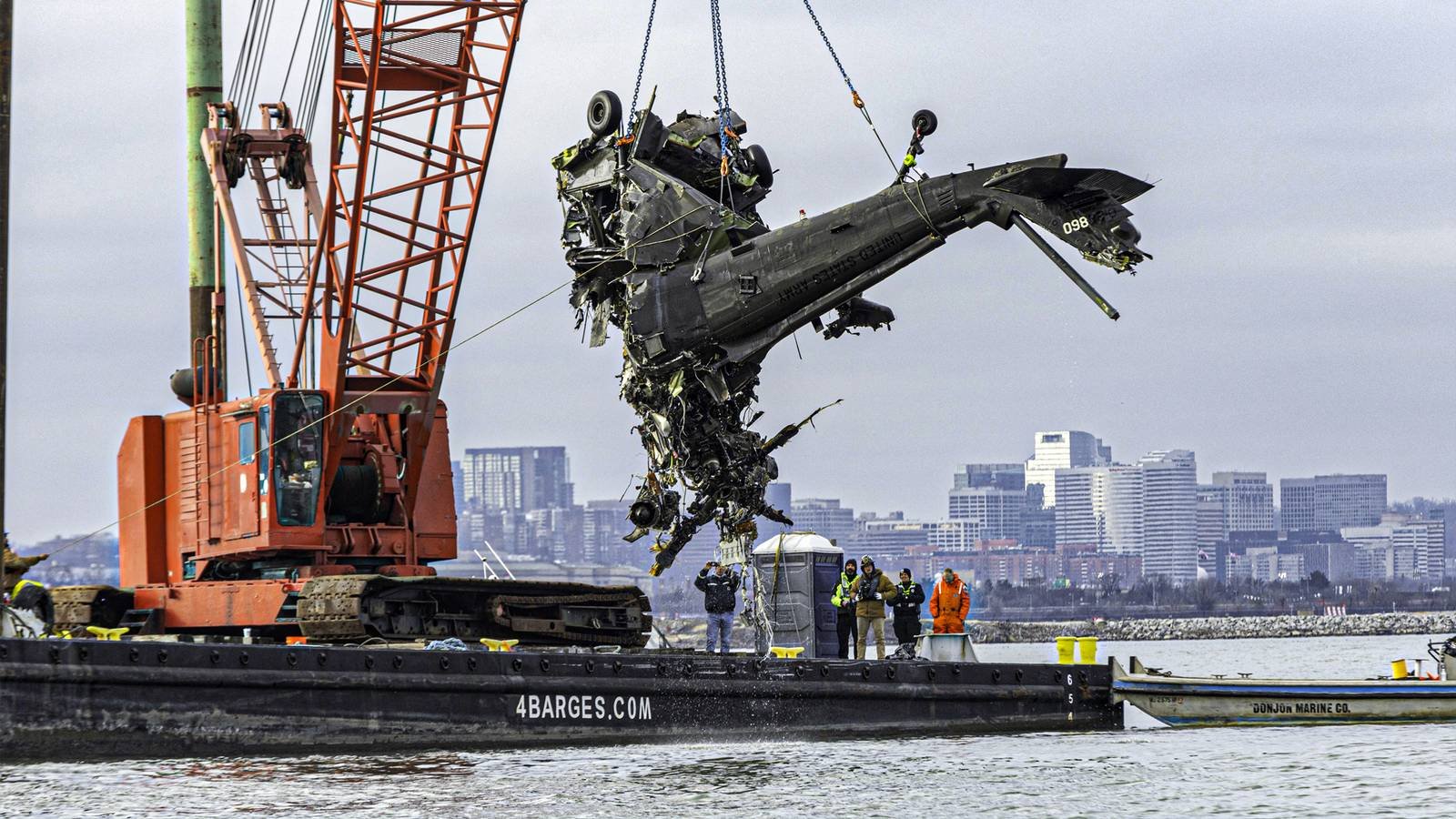
As dusk enveloped the capital city of the United States, a somber epilogue unfolded in the annals of aviation history. On that fateful evening, at precisely 8:48 PM, an American Airlines Bombardier CRJ-700 regional jet, registered as N709PS and operated by PSA Airlines, met its untimely end when it collided midair with a US Army Sikorsky UH-60L Black Hawk helicopter. This catastrophic event transpired near the final approach end of Runway 33 at Ronald Reagan Washington National Airport, right against the radiant backdrop of the cityscape. Tragically, 67 souls perished—64 cherished passengers and crew aboard the airliner, alongside three gallant servicemen aboard the helicopter.
In the wake of the collision, which became the most catastrophic aviation disaster in the United States in over two decades, the NTSB unearthed several critical revelations. Notably, while the Black Hawk helicopter bore the ADS-B Out hardware crucial for transmitting its position, the system was, against all odds, dormant at the time, rendering its whereabouts invisible to the surrounding air traffic.
Moreover, the Traffic Collision Avoidance System, designed to offer pilots warnings to avert impending collisions, held its tongue below 400 feet—an alarming detail given that the ill-fated encroachment occurred just 300 feet above the tranquil Potomac River. The American Airlines crew, blissfully unaware of the impending chaos, received no such alert as they gracefully descended towards their destination, steered through airspace instruction meant to navigate them past the Black Hawk.
Compounding this tragedy were systemic flaws entrenched within the very fabric of aviation safety. The helicopter was instructed to navigate beneath commercial flight paths at an altitude permitted to hover perilously close to those descending towards the airport. Investigators concluded, with somber finality, that the root of this calamity lay in the design of helicopter routes threading the critical airspace near DCA.
A $400 GPS Device Could Have Alerted The Crew 59 Seconds Earlier
In retrospect, the ramifications of this tragedy resonate far beyond the accidents themselves. The findings yielded by the NTSB underscored the pivotal role of ADS-B technology in averting calamity. So profound was the potential for intervention that investigators firmly asserted that had both the American Airlines and the Black Hawk been equipped with functional ADS-B systems, the alarm bells could have echoed 59 seconds before calamity struck. The timely intervention afforded by such a device could have altered the trajectory of this disaster—allowing both crews to communicate with air traffic control and enact evasive maneuvers with time to spare.
Despite the NTSB’s tireless advocacy since 2006—recommending to the FAA on numerous occasions the necessity of deploying ADS-B systems—little traction was achieved prior to the crash.
To highlight the capabilities of ADS-B technology further, one must consider the portable receivers used predominantly in general aviation. These devices, often retailing for a modest few hundred dollars, seamlessly connect to digital displays, granting pilots the ability to track nearby aircraft in real time. In an alternate reality where both vessels were embraced by this life-affirming technology, the aerial ballet could have danced on—uninterrupted.
Systemic Failures Beyond Simply ADS-B
As discussions unfold around the implications of ADS-B negligence, the NTSB reflected deeply on the systemic fractures that led to this tragedy. It was not merely a singular technology missing from the equation, but rather an intricate web of lurking vulnerabilities that coalesced that night to produce an unspeakable loss.
Of profound concern was the precarious positioning of helicopter routes, with military helicopters cutting through airspace typically reserved for commercial flight descents. Despite the stark warnings highlighted by air traffic personnel, and evidence of a series of near-miss incidents ringing clear through the months prior, the FAA struggled to recalibrate the safety protocols deemed necessary.
What Has Changed Since January 2025?
As the world turned the page months beyond that fated January evening, a series of regulations emerged, forged from the ashes of this tragedy. The FAA swiftly acted, curbing helicopter flights within close proximity to DCA and shuttering routes once seen as perilous.
American Airlines took a decisive step by retiring Flight 5342, transitioning its service to a newly designated flight number, while the US Army hastened the installation of ADS-B systems in their Black Hawk helicopters, marking a turning point in military preparedness and safety.
However, the legislative labyrinth to implement comprehensive safety measures has proven daunting. The ALERT Act, a beacon of hope for aviation safety reform, emerged in early 2026, aiming to mandate ADS-B In capability across civilian and military aircraft venturing near bustling airports. This act aspires to tackle the chair of recommendations stemming from the NTSB while bolstering funding for air traffic control enhancement—an essential measure to avoid further tragedies.
In the wake of such heart-wrenching loss, a resilient commitment to safety, technological integration, and situational awareness emerges as the guiding force, forever changing the face of aviation as we know it—inviting a future where every flight is unshackled from the specter of danger, soaring ever higher into the limitless skies.