
Exploring the Aerial Marvel of Skardu Airport: A Journey Through the Spectacular Karakoram
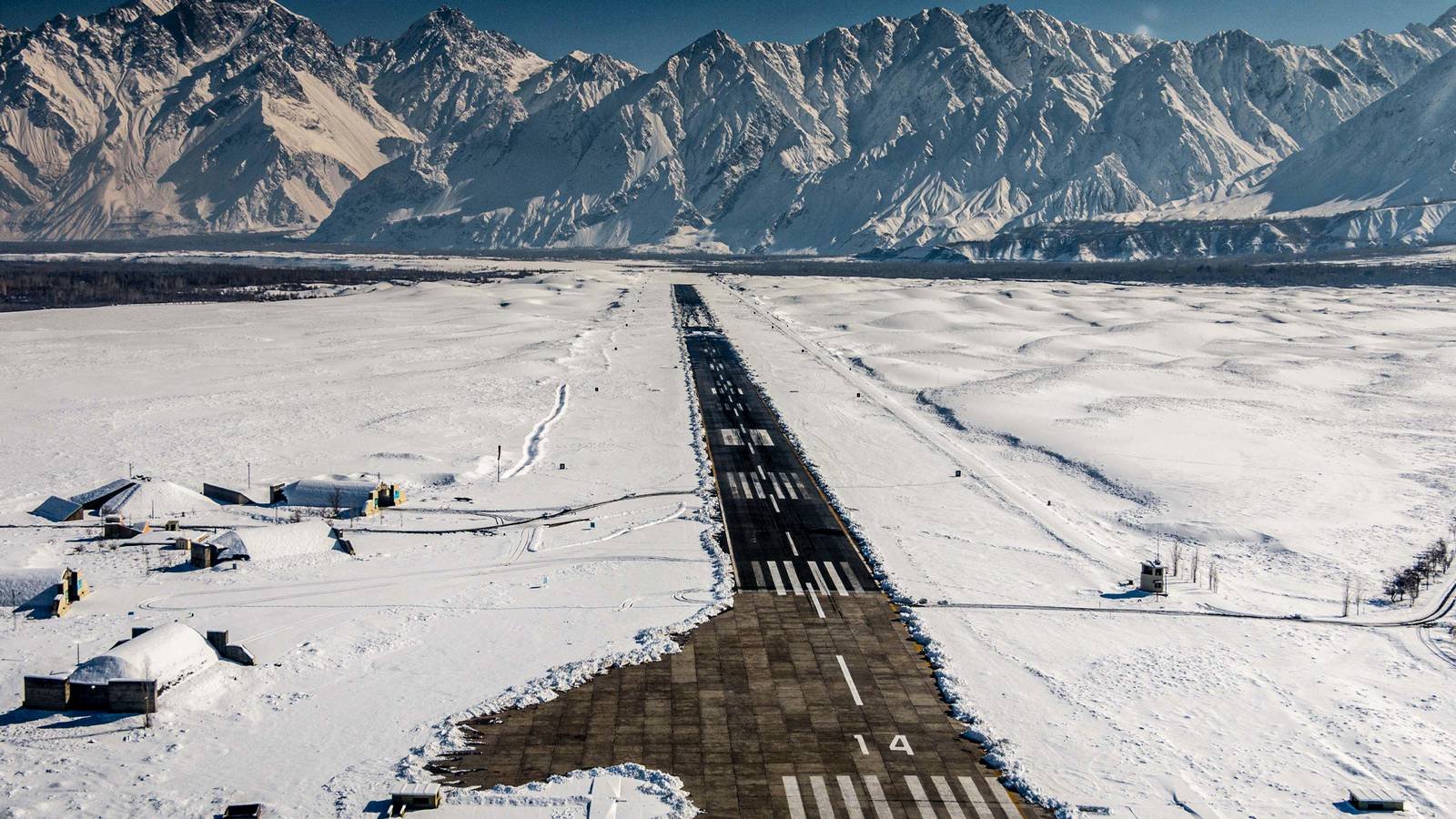
Nestled within the breathtaking expanse of the Gilgit-Baltistan region in northern Pakistan, Skardu Airport—identified by its IATA code KDU—stands as a testament to both human ingenuity and the audacious beauty of the natural world. Perched at an astonishing altitude of approximately 7,316 feet, this extraordinary aerodrome is ensconced amidst the colossal majesty of the Karakoram mountain range, home to some of the planet’s tallest peaks, including the iconic K2, the second-highest mountain globally.
While the airport’s infrastructure boasts long, asphalt runways capable of accommodating significant aircraft—an impressive feat for such a remote locale—the geographical confines of Skardu present unique operational challenges that are unparalleled in contemporary aviation. The allure of this captivating destination has surged in recent years, amplified by the enthralling cockpit videos shared by seasoned pilots and ardent aviation enthusiasts, depicting their daring journeys as they skillfully navigate their crafts through tight valleys flanked by mountains that soar nearly 19,000 feet, culminating in the breathtaking yet challenging “Zulu bend” maneuver to align with the airport’s runway.
At first blush, Skardu Airport might appear surprisingly accommodating for a mountainous destination of its ilk. Its primary runway extends approximately 11,944 feet—far surpassing the dimensions of many regional international airports scattered across Europe and Asia. A secondary runway, measuring roughly 8,740 feet, further enhances operational versatility. Such expansive runways facilitate the operation of aircraft like the Airbus A320 and Boeing 737, routinely flown by Pakistan International Airlines, connecting the cultural hub of Islamabad to this hidden gem.
However, the length of the runway is but one piece of an intricate puzzle. Uniquely positioned within a confining valley system, Skardu requires pilots to navigate a labyrinth of towering terrain features, notably imposing restrictions on approach paths. In lieu of a conventional descent from cruising altitude, aircraft must meticulously spiral through the valleys of the Karakoram, maintaining precise altitude control—sometimes enveloped by the very mountains they traverse.
Elevated further into the sky, Skardu presents another dimension of complexity: the enigmatic dance of nature at high altitudes. Here, the air thins, and with it, aircraft engine performance wanes, demanding longer takeoff rolls and intricate weight calculations. During the sweltering summer months, soaring temperatures compound the challenges, creating high-density altitude conditions—what pilots colloquially refer to as “hot and high.” The margins for performance, even with the generous runway length, become razor-thin against the backdrop of sea-level airports.
The Iconic “Zulu Bend”
The pinnacle of the Skardu experience lies in its most celebrated approach—the dramatic "Zulu bend." This remarkable maneuver, executed during the final stages of an approach, demands impeccable precision and an unwavering focus. After charting a route through the rugged mountain valleys from Gilgit, pilots undertake a masterfully timed turn amidst steep terrain before gracefully entering the Skardu Valley and aligning with the runway.
Devoid of conventional instrument-guided approaches that rely on electronic glides and navigation aids, the Zulu bend unfolds based on visual cues. Pilots carefully monitor a myriad of factors: the surrounding terrain, airspeed, descent rate, and aircraft configuration—all while preparing for the vital landing. A miscalculation—whether entering the turn with undue haste or descending too steeply—could spell derision for the day’s flight plan, particularly in conditions stripped of visibility or beset by turbulence.
Moreover, the demands of the Zulu bend mirror the tactical aerial maneuvers commonly reserved for military aviation, replacing routine airline procedures with the pulse-quickening essence of mountain flying that captivates aviation enthusiasts and newcomers alike.
A Visual Approach in Contemporary Aviation
In a mesmerizing juxtaposition, Skardu Airport emerges as a remarkably consistent slice of aviation tradition amidst a world where technology often reigns supreme. Unlike many modern airports equipped with sophisticated instrument landing systems designed for precision approaches, Skardu remains anchored in the time-honored practice of Visual Flight Rules (VFR) operations. Pilots depend keenly on their visual contact with the breathtaking landscape, enhancing the exhilarating experience of flight while highlighting the intrinsic challenges posed by the extraordinary topography that surrounds them.
Frequent weather fluctuations exact a further toll, as the unpredictable climate of the Karakoram can shift dramatically. The valleys may appear serene, but within moments, clouds can shroud the land in mystery, imposing strict visibility limitations that compel precautionary measures. Such conditions often lead to delays, diversions, or outright cancellations—reminders that Skardu’s operations remain intimately linked to the whims of nature.
This reliance on visual monitoring places an enormous responsibility on flight crews, who must maintain an acute awareness of their surroundings, deftly navigating their aircraft between earthward peaks that loom ever nearer. Unlike the precise navigation provided by automated systems, Skardu demands an active and vigilant approach, deepening the pilot’s connection to the environment they traverse.
The Realities of Meteorological Might
Perhaps the most formidable challenge at Skardu Airport stems from the relentlessly capricious weather, influenced by the dramatic oscillations of the Karakoram’s landscape. The sudden formation of clouds can obscure the most benign of approaches in mere moments. Wind shear—an unseen adversary—can unleash its fury with ferocious downdrafts, unpredictable updrafts, and turbulent crosswinds, defying stability when it is most critical. Seasonal snows add layers of complexity, ensnaring the runway in hazards of reduced visibility and icy conditions, further deepening the challenges pilots must confront.
Visibility can collapse within minutes, rendering valleys unrecognizable and fueling the necessity for prudent decision-making. Pilots accustomed to the extremes of mountainous terrain often adhere to conservative approaches, opting to abort a landing in the face of marginal conditions—a pragmatic choice wrought from an acute awareness of their geometric surroundings that starkly contrasts with the straightforward go-arounds of flatter landscapes.
The Unyielding Allure of Skardu
Often likened to the revered Tenzing-Hillary Airport in Nepal, Skardu presents a captivating dichotomy of grace and peril. While Tenzing-Hillary is renowned for its diminutive runway, Skardu’s lengthy runways contrast sharply with its intricate approach—an arena where formidable landscapes and modern aviation grapple in an exhilarating display.
Much like Innsbruck Airport, Skardu embodies a realm of territory-constrained approaches and unpredictable aerodynamics. While Innsbruck benefits from advanced infrastructure and navigational aids, Skardu, situated in relative isolation, persists as a reflection of both remote beauty and the soaring challenges of aviation within the grandeur of the Karakoram.
A convergence of daring maneuver, majestic scenery, and operational discipline culminates in the enthralling tale of Skardu Airport—a destination that captivates aviation enthusiasts and adventurers alike. As flights seamlessly connect this hidden gem with the urban pulse of larger cities, the aura of mystery and excitement inherently woven into each landing and takeoff serves as a harbinger of the unparalleled journeys that await those daring enough to venture to such heights.