
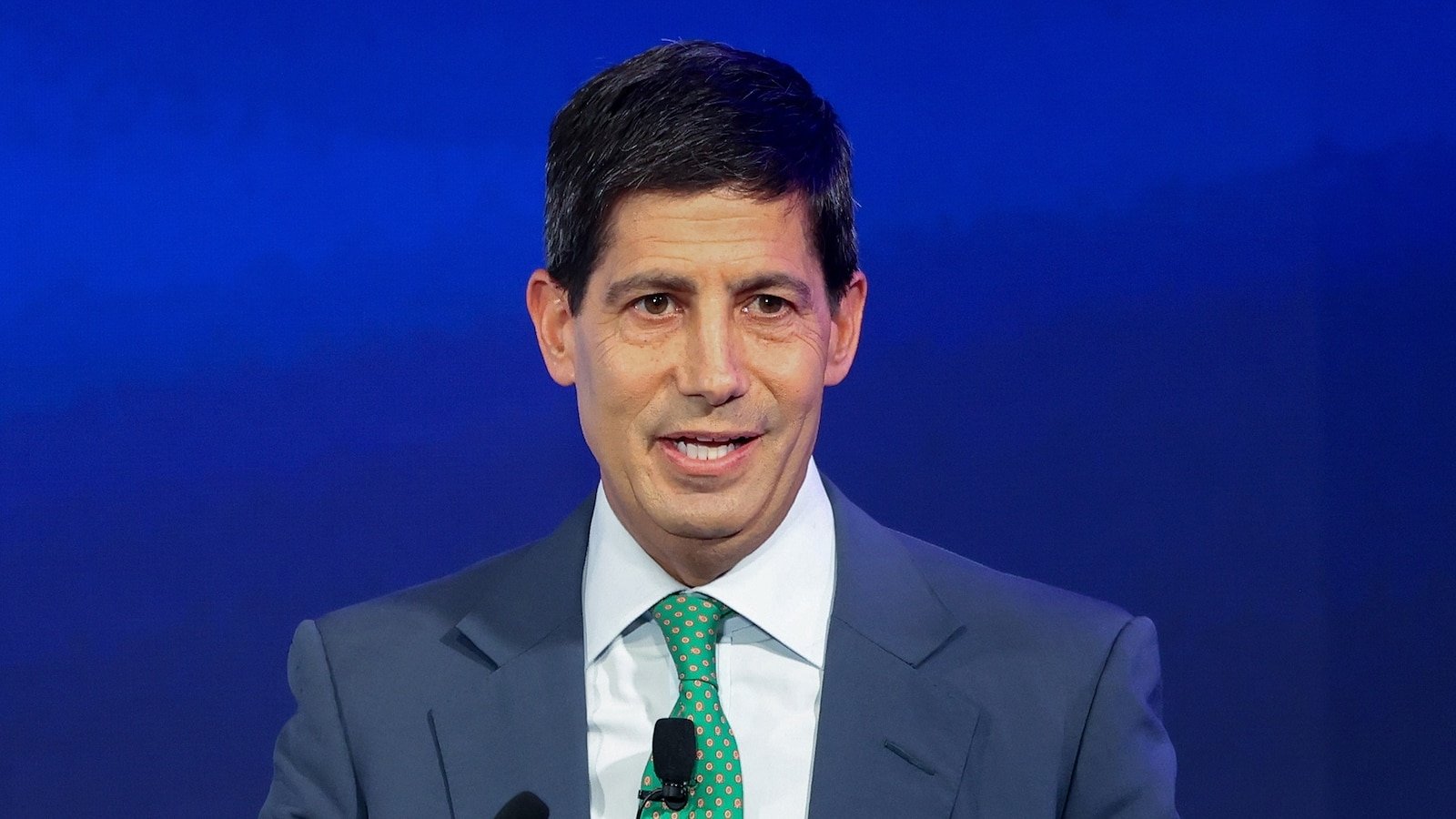
Title: "Navigating Economic Currents: The Future of Kevin Warsh and the Federal Reserve"
In the intricate theater of global finance, where precision and poise intertwine with the pulse of economy, the spotlight has turned towards Kevin Warsh, a figure poised to potentially lead the Federal Reserve through uncharted waters. As whispers of his Senate confirmation hearing grow louder, anticipation envelops the financial realm, a realm steeped in both tradition and the relentless pursuit of progress.
Amidst bipartisan currents of contention, Warsh’s nomination unfolds against a backdrop of investigations swirling around the incumbent Chair, Jerome Powell. This tumult, centered on allegations of misleading testimony regarding an office renovation, casts a shadow over Warsh’s ascent. The stakes are undeniably high; the national economy teeters on the delicate balance of interest rates, awash with complexities both foreseen and unforeseen.
Warsh, a former luminary within the ranks of the Federal Reserve Board, brings to the fore a blend of Wall Street acumen and governmental insight—a pedigree shaped by years of navigating the labyrinthine corridors of fiscal policy. With ties forged in the crucible of the 2008 financial crisis, when decisive actions were paramount, his experience resonates with a transformative urgency.
His journey is a tapestry interwoven with notable episodes—appointments heralded by both challenge and triumph. Presently, his affiliation with the Hoover Institution, an esteemed think tank at Stanford University, signifies his ongoing engagement with the intellectual underpinnings of economic thought. Yet, skepticism lingers, as voices from across the aisle urge for a commitment to unwavering independence—fears that Warsh may be perceived as merely an extension of a presidential agenda.
As the Fed grapples with twin pressures of inflationary concern and labor market stability, the nomination of Warsh adds another layer of complexity. The tightrope he must walk is fraught with the dual specters of inflation—an ever-present force threatening to unbalance the scales of economic growth. His past tendencies as an interest-rate hawk may find themselves at odds with current realities, necessitating a recalibration in response to dynamic market pressures.
In this opulent arena of economic governance, where decision-making reverberates through households and marketplaces alike, Warsh stands at a precipice. His ability to synthesize past lessons with present imperatives will be pivotal in sculpting the future contours of American economic policy. One can almost feel the palpable anticipation in the air, akin to the electric charge before a grand performance, as he prepares to respond to the challenges that lie ahead. As we await the unfolding of events, the narrative weaves itself into one of resilience, strategy, and an artist’s touch—an extraordinary tapestry reflective of an era rich in both promise and complexity.