
Title: "Navigating Geopolitical Waters: High-Stakes Diplomacy Between China and the United States"
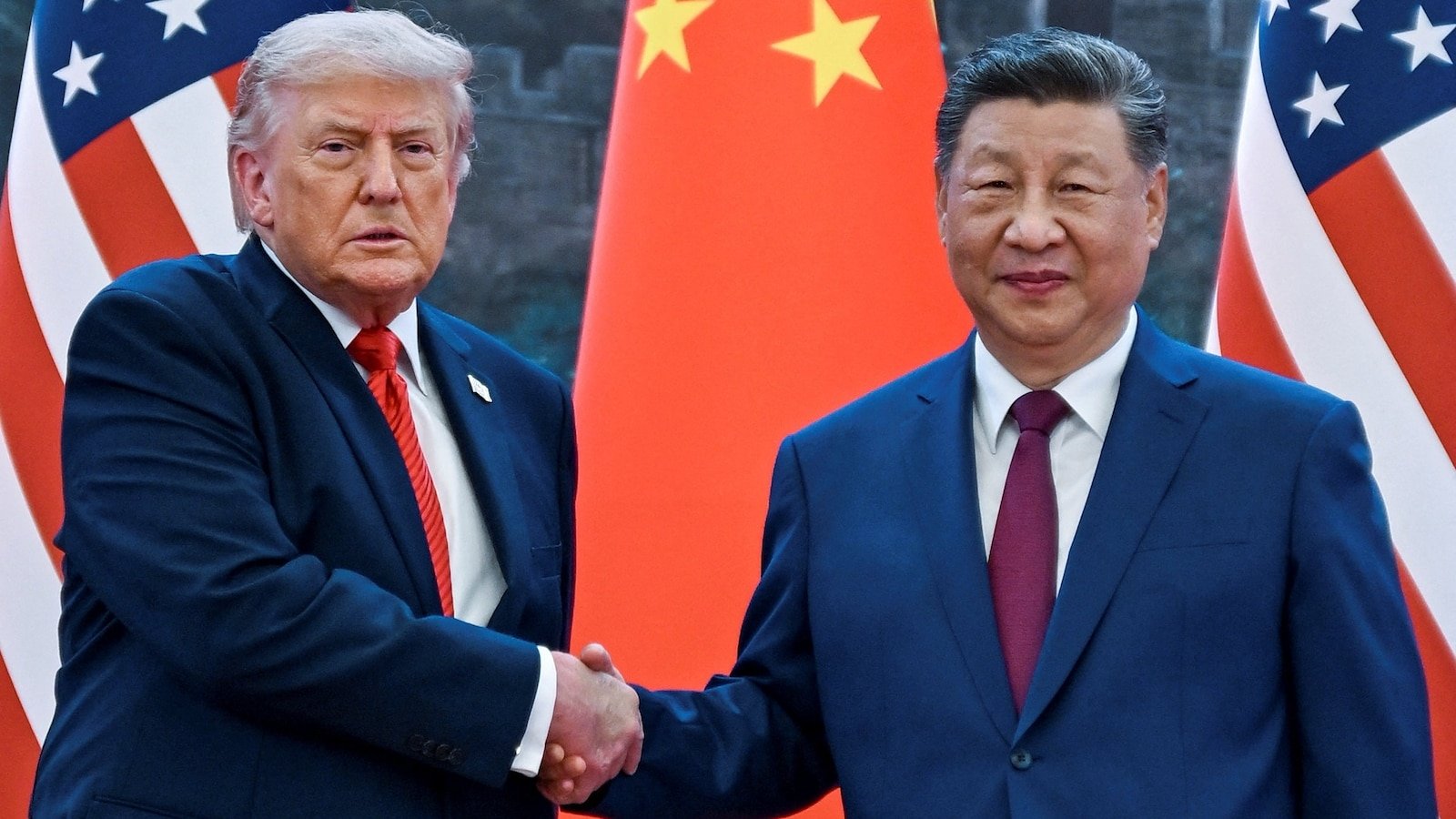
In the grand tapestry of international diplomacy, where each thread intertwines with cultural nuances and strategic intent, the recent summit between Chinese President Xi Jinping and U.S. President Donald Trump emerges as a remarkable tableau of ambition and gravity. Against the resplendent backdrop of Beijing’s Great Hall of the People, this meeting unfurled like an intricate dance, highlighting intricate geopolitical dynamics and the delicate balance both nations strive to maintain.
With a graceful formality, President Trump was welcomed into this historic setting, emblematic of ancient traditions and modern aspirations. As he shook hands with Xi, the gravity of their dialogue permeated the atmosphere, weighty with the implications of their words and decisions. Amidst the ceremonial flourishes, Xi’s clarion voice echoed warnings regarding Taiwan, a subject poised at the fulcrum of U.S.-China relations. He asserted with unwavering conviction that mishandling this delicate matter could lead to escalating tensions, urging for a pathway of mutual respect and careful diplomacy.
The summit unfolded during a precarious time, as shadows loomed from the ongoing conflict with Iran, an issue of profound significance not only for the U.S. but for China as well; they remain reliant on Iranian oil. In the lean corridors of power, leaders exchanged strategic insights, seeking a consensus that would preserve the tranquility of both their nations while addressing the broader implications of regional stability.
Trump’s declaration to explore greater cooperation with China reverberated throughout the summit, reflecting a shared understanding that both nations have much to gain by fostering a relationship based on collaboration rather than rivalry. Such aspirations were starkly illustrated as Xi emphasized that both countries could mutually benefit from a relationship steeped in cooperation, rather than confrontation, a sentiment that resonated powerfully within these hallowed walls.
As discussions turned to pressing issues, from energy trade to agricultural investments, both leaders found common ground in the contextual need to ensure the open flow of critical waterways like the Strait of Hormuz. The two nations nodded in agreement on the imperative of safeguarding this vital channel through which much of the world’s energy supply traverses, a point underscored by the shared understanding that stability is paramount for global economic prosperity.
As the meeting reached its crescendo, Trump openly lauded Xi, acknowledging his leadership with a warmth that highlighted their personal rapport. His words, laden with sincerity, encapsulated a belief in the transformative power of diplomacy. The convivial exchange spun a narrative of hope amidst uncertainty, bridging differences with mutual respect and forward-looking ambition.
Yet, amid these high aspirations, the specter of Taiwan lingered heavily, a reminder of the intricate web of relations that underpins both nations’ future. As Xi articulated his concerns, the message was clear: careful handling of sensitive subjects is essential if progress is to be achieved. This delicate balance of power — of words and intentions — crafted a moment that transcended mere political engagement: it became a narrative underscored by cultural reverence and the hope for a future marked by cooperation and mutual advantage.
Eventful and significant, this summit illuminated the complex layers that characterize U.S.-China relations amid an ever-evolving global landscape. Standing on the precipice of history, both leaders entered uncharted waters, their journey one of craft and careful navigation, filled with aspirations for a shared future not just for their nations, but for the entire world, steeped in the luxurious promise of collaboration over conflict.