
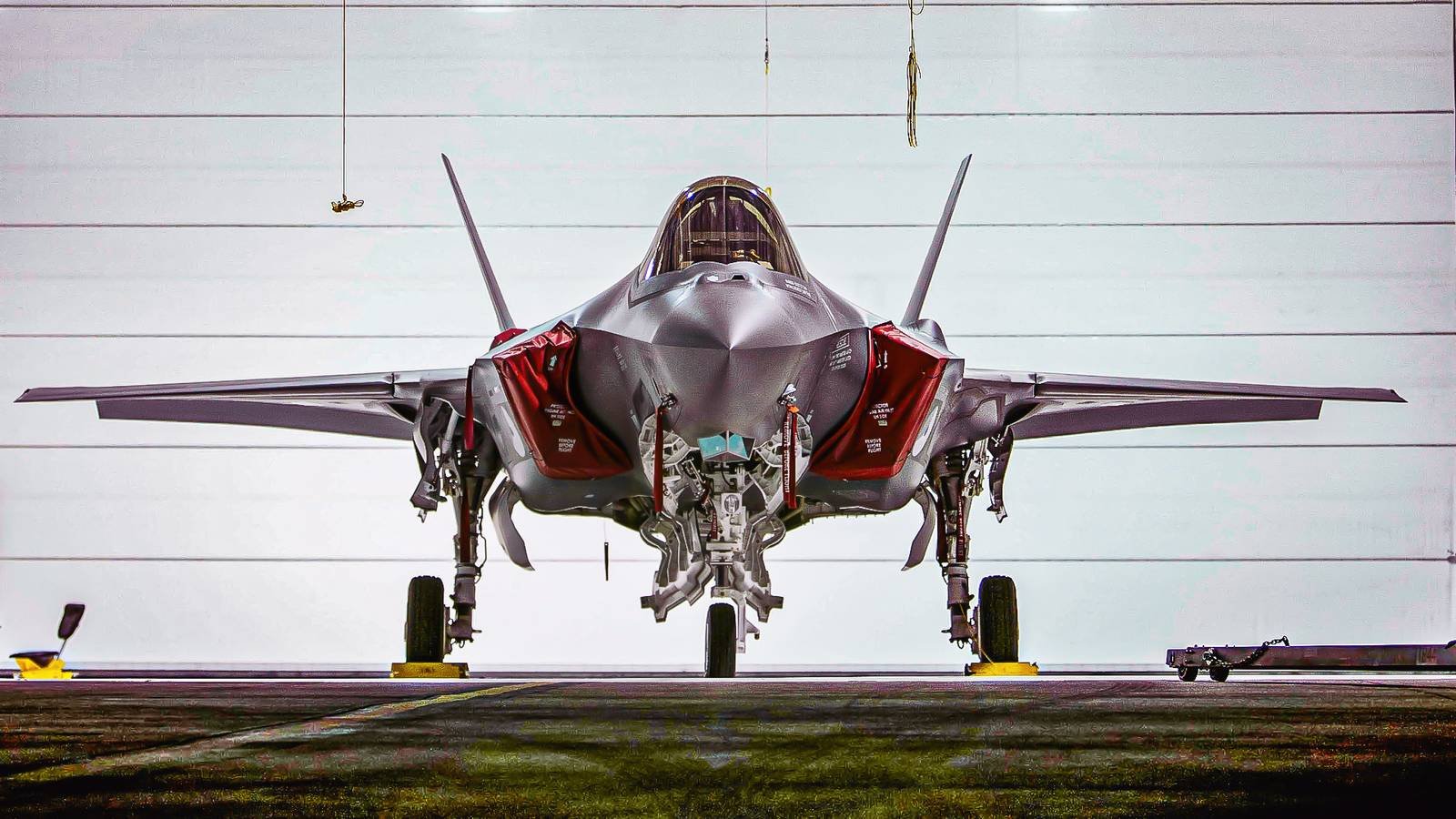
Title: Navigating Heat: The Evolution of the Harrier to the F-35B
In the luminous panorama of aviation history, the Harrier family stands as a testament to remarkable innovation and skyward ambition. However, this aviation marvel, known for its extraordinary vertical lift capabilities, faced significant challenges that would chart its course from the vibrant skies of yesterday to the sophisticated realms of today’s aerospace technology.
The Harrier’s legacy is imbued with the fiery fervor of its intense exhaust, a force so potent that it left a mark—notably scorching flight decks and runways beneath its powerful presence. This fiery signature curtailed its operational agility, particularly in sweltering climates or when burdened with heavy payloads, creating a conundrum of heat-induced maintenance burdens that men and machines alike had to brave.
Engineered with an ingenious but demanding layout, the Harrier directed its scorching exhaust downward through four rotating nozzles, generating a fierce infrared signature that stirred both awe and apprehension. The formidable Rolls-Royce Pegasus engine produced a singular, omnipotent jet blast, while the contemporary F-35B deftly redistributes thrust, merging the central LiftFan, swiveling exhaust, and innovative wing roll posts into a ballet of balanced aerial maneuverability.
While the F-35B, with its astute engineering, presents a significant improvement over its predecessor, it does not entirely surmount the challenges of thermal management. Yet, it does pave the way for a markedly larger Short Takeoff and Vertical Landing (STOVL) aircraft, equipped with sophisticated electronics that ensure heightened operational readiness and safety.
The legacy of the Harrier, particularly the British Aerospace Sea Harrier, resonates through the annals of military aviation history, etched forever in the narrative of the 1982 Falklands War, where it showcased exceptional capability against formidable Argentine forces. As the curtains fell on its storied career, the Royal Navy bid adieu in 2010, turning its gaze toward the future—embodied in the cutting-edge F-35B. Today, the Harrier’s prowess lingers in the hearts of those flying the upgraded AV-8B II within the Italian Navy, Spanish Navy, and U.S. Marine Corps. However, the winds of change portend a graceful retirement; the Italian Navy, for instance, envisions phasing out the Harrier by 2028, while the Marines are poised to retire theirs in 2026.
As advancements unfold, the transformative F-35B emerges as not merely a successor but as a revolutionary leap in aerial warfare. Adorned with stealth capabilities and encompassed by the rich tapestry of modern electronics, it harbors an unrivaled payload and an extended combat reach—eclipsing the limitations of the Harrier. The F-35B’s technical prowess rests on the influential legacy of the Lockheed X-35 demonstrator, which bested its competitors in Vertical Takeoff and Landing demonstrations with its groundbreaking innovations.
In navigating the realm of heat management—a challenge inherent in modern design—the F-35B employs a sophisticated distribution of lift, skillfully reallocating its downwash through a harmonious balance of exhaust systems. This malleability not only mitigates risks to the ship’s deck but ensures that the aircraft itself remains cool-headed amid operational fervor.
Yet, the journey isn’t devoid of challenges. While the F-35B showcases an enlightened approach to thermal management compared to its predecessor, it still wrestles with formidable heat production during peak demands. Consequently, modifications, coatings, and other mitigative measures have become par for the course in sustaining the integrity of both the ship and the aircraft.
As it stands, the F-35B harnesses an overwhelming arsenal of technology that could potentially overload its thermal infrastructure, thereby compelling engineers and aviators to innovate continuously. With the F-35’s Block 4 upgrades on the horizon, each enhancement portends an increase in electronic load, making thermal management one of the pivotal challenges of modern aviation.
The interplay of electronics within contemporary fighter jets increases the complexity of maintaining optimal temperature ranges, and this continues to resonate profoundly in the development of the next generation of aircraft. From the allure of the Tempest/GCAP and F-47, the aviation community anticipates the challenge of managing significant heat loads while preserving their stealth capabilities. For current and future aerial warriors, heat management transcends mere engineering, becoming a pivotal element in the very essence of flight.
In this intricately woven tapestry of aviation mastery, we witness a vivid narrative that ascends through epochs of flight, from the heroic Harrier to the avant-garde F-35B, marking a glorious passage toward a future imbued with unparalleled possibility—a sky not of mere flight, but of boundless imagination.