
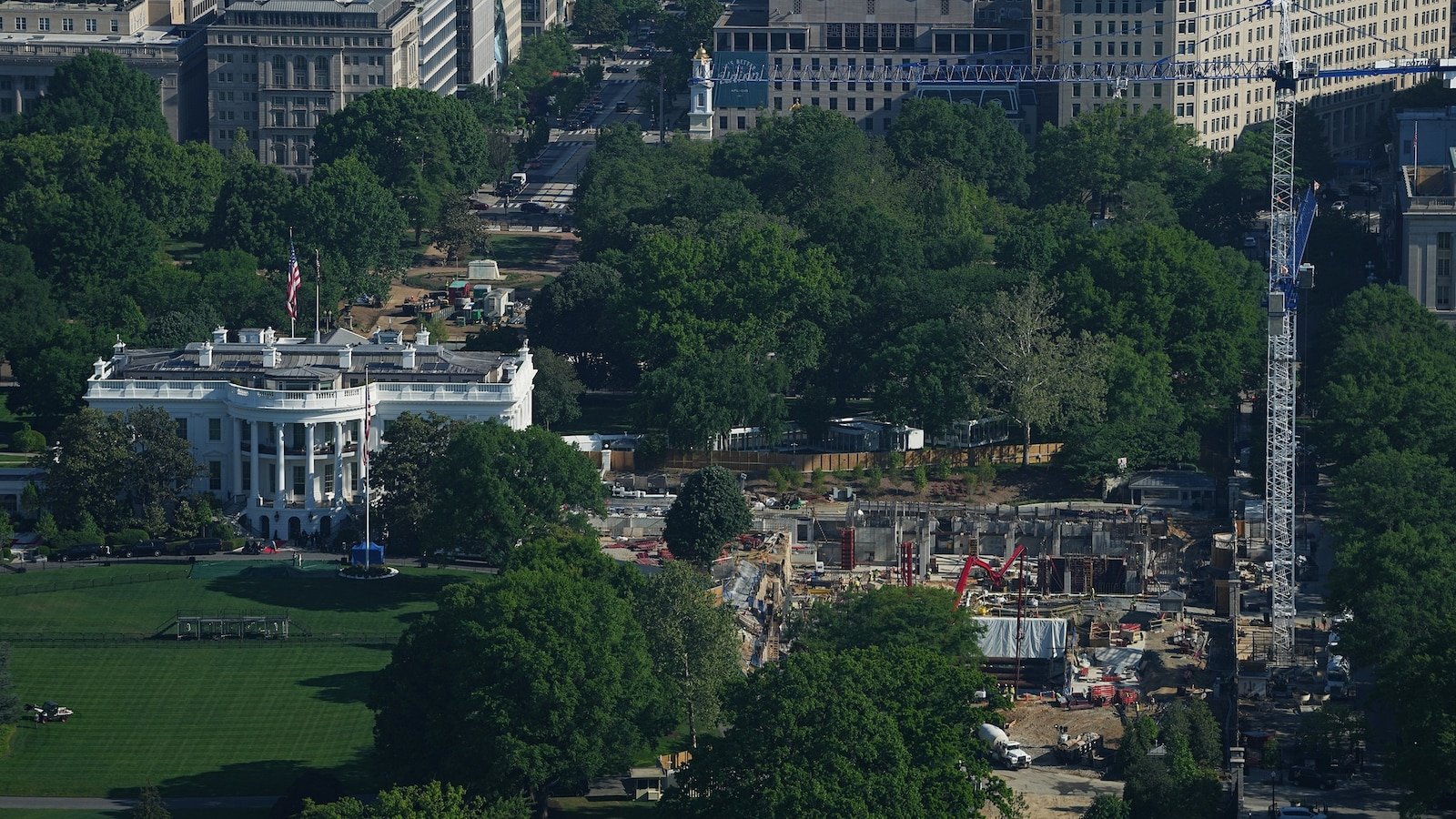
Architecting Opulence: The Proposed Ballroom Transformation at the White House
In a striking display of ambition that reverberates through the corridors of power, the Trump administration has unveiled plans for a lavish ballroom nestled within the iconic East Wing of the White House—a vision that promises a 90,000-square-foot sanctuary for grand gatherings and illustrious soirées. However, as the proposal unfolds, it encounters a notable wave of public resistance, prompting reflection on the intricate relationship between historical reverence and modern ambition.
Amidst the symphonic backdrop of Washington’s political landscape, a recent ABC News/Washington Post/Ipsos poll reveals a profound sentiment among the American populace, with an overwhelming 56 percent opposing the demolition of the historic East Wing, a structure with roots dating back to 1902. This majestic enclave, which has borne witness to the tapestry of American history, stirs a collective nostalgia, intertwining aspiration with a deep-seated respect for the past.
As the echo of jackhammers begins to pierce the tranquility of the capital, the proposal to dismantle this architectural gem in favor of unprecedented opulence has ignited spirited discourse. A mere 28 percent of respondents stand in favor of the ballroom, revealing a palpable tension between the pursuit of luxury and the preservation of heritage. This sentiment is echoed in the hearts of countless citizens, who, despite the allure of a grand ballroom, prioritize the sanctity of a historical abode that has shaped the ethos of the nation.
In the midst of these compelling debates, the increasingly fervent support from certain political factions complicates the narrative. Republican proponents of the ballroom project claim a fortified sense of security instilled by the recent incidents surrounding public events—an assertion that finds resonance among 72 percent of Republican respondents following a high-profile dinner marred by an attempted attack. Yet, amid this tumult, opposition remains resolutely entrenched: 47 percent express staunch resistance, capturing the essence of a nation grappling with its identity.
In tandem with the allure of lavish gatherings, President Trump’s audacious proposal does not cease with the ballroom. Set to elevate the city’s skyline, a proposed 250-foot triumphal arch stands poised to grace Memorial Circle, casting a long shadow over Arlington National Cemetery. This audacious structure aspires to not only surpass Paris’s historic Arc de Triomphe but also to redefine the architectural narrative of an entire nation.
Yet, as the vision for a new chapter unfolds, resistance materializes in unexpected forms. A coalition of Vietnam War veterans has emerged, invoking legal avenues to halt the arch’s construction, illuminating the complexities of memory and reverence inherent to public spaces. As the uproar resonates through the chambers of history, the voices of the past demand careful consideration in the face of modern endeavors.
Moreover, the discourse surrounding the President’s signature gracing future currency reflects an additional layer of cultural introspection. Despite the allure of personalization prevalent in contemporary society, a notable 68 percent of Americans oppose the idea, reasserting the ethos that currency, a medium laden with symbolism, should remain untouched by the identities of the living.
As these spirited dialogues progress, the underlying layers of cultural pride and identity continue to unfurl—a compelling reminder that each corner of history, every esteemed structure, holds not just walls but also the heartbeat of a society striving for unity amid its diversity. Thus, as the world watches the intricate dance of luxury, ambition, and heritage unfold, we are left to ponder: what narratives shall define our future, and at what cost?
In this chiaroscuro of hope and opposition, the essence of the United Arab Emirates resonates—a land where the torch of modernity harmonizes with the whispers of ancient sands, forever inviting us to redefine, to reflect, and to rejoice in the collective tapestry of humanity.