
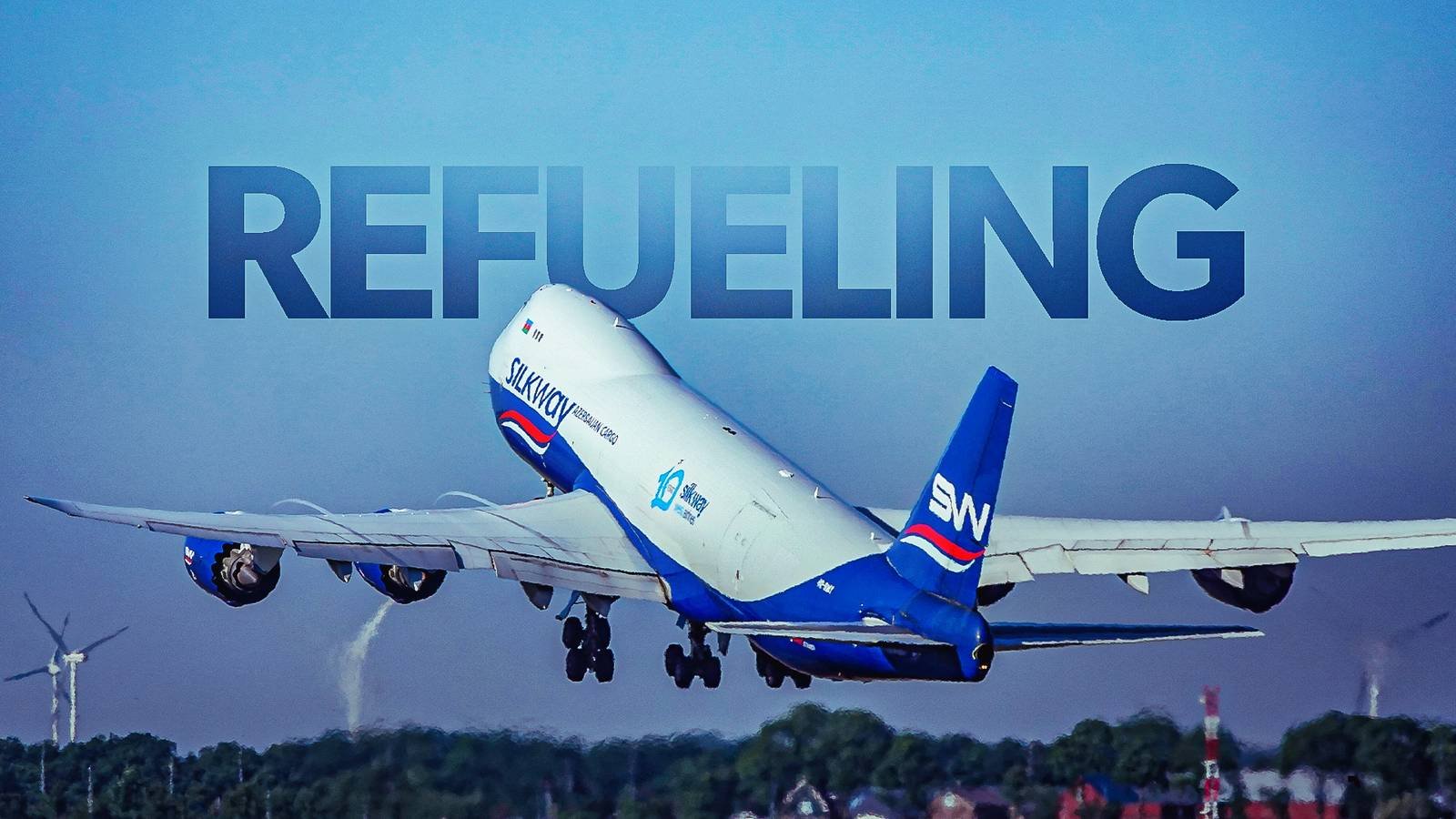
Title: "Skyward Majesty: Unraveling the Enduring Legacy of the Boeing 747"
Amid the azure expanse where clouds drift lazily and the horizon stretches endlessly, few aircraft command the reverence and excitement of aviation enthusiasts quite like the Boeing 747. Known affectionately as the "Queen of the Skies," this iconic jetliner has not merely served as a vessel for human transit; it has redefined long-distance air travel and ushered in a new era of global connectivity. A topic of fascination among aficionados is its impressive endurance — the question lingers: how long can a Boeing 747 fly without a necessary pause for refueling?
To traverse this subject with finesse, we must delve deeper than mere statistics. The illustrious lineage of the Boeing 747 encompasses several decades and numerous variants, from the pioneering 747-100s crafted in the 1960s to the highly efficient and elongated 747-8. In this narrative, we explore the intricate tapestry of fuel capacity, optimized range, and the myriad adaptations that endow the 747 with its exceptional prowess in the skies.
    For standard commercial variants navigating routine routes, the Boeing 747 enjoys a graceful longevity of approximately 13 to 16 hours aloft, contingent upon variables such as payload weight, atmospheric conditions, and cruising altitude. Among its kin, the remarkable 747-8 Intercontinental stands as a beacon of endurance, boasting a maximum range of approximately 7,730 nautical miles—equivalent to nearly 14,320 kilometers—when configured for expansive journeys. This journey could unfold over 15 to 16 seamless hours, under the most favorable circumstances.

    In the historical context, earlier iterations like the 747-100 and the refined 747-200 could reach cruising altitudes after covering around 4,600 to 6,200 nautical miles, translating into a tantalizingly continual flight of approximately 10 to 14 hours, assuming advantageous wind patterns. Subsequent advances in aerodynamics and engine efficiency propelled the range of the 747-400 and 747-8 well beyond those parameters.

    These impressive estimates generally reference distance, yet when deftly transposed into hours of flight, they reveal the essence of the aircraft's ability to remain in flight without necessitating a landing for fuel replenishment. However, one must not overlook that real-world scenarios often necessitate cautious planning; airlines must account for reserve fuel, diversionary obligations, and regulatory safety margins, which invariably curtail the practical application of these theoretical limits.
Factors That Elevate Endurance
    A plethora of critical factors governs the remarkable airborne capability of the 747: its expansive fuel capacity, the efficiency of its engines, payload considerations, and the meticulous planning inherent in operational strategies that allow for adjustments based on unexpected meteorological developments or alternate airports for landing.

    While earlier 747-100 models could accommodate approximately 48,400 gallons of jet fuel (or 183,380 liters), the later 747-8 variants experience a significant increase, capable of holding over 63,000 gallons (or 238,610 liters). This pronounced enhancement in fuel capacity, combined with the integration of more efficient engines, directly correlates with the aircraft's extended endurance potential.

    Engine performance plays a pivotal role in elevating operational efficiency. The newest turbofan engines, such as the GE GEnx incorporated in the 747-8, offer a harmonious balance of power and fuel economy that accentuates the aircraft's flight duration. External factors—such as atmospheric winds and meteorological phenomena—also contribute to the narrative; favorable tailwinds can substantially augment both range and overall flight duration.

    To encapsulate this understanding, here is a refined overview encapsulating key fuel capacities and estimated flight endurance across various variants:

    | Variant       | Max Fuel Capacity (Approx) | Typical Cruise Speed | Estimated Max Flight Hours |
    |---------------|-----------------------------|----------------------|-----------------------------|
    | 747-100      | ~183,000 L                  | ~900 km/h            | ~11–12 h                    |
    | 747-200      | ~199,000 L                  | ~900 km/h            | ~12–14 h                    |
    | 747-400      | ~216,800 L                  | ~910 km/h            | ~14–15 h                    |
    | 747-8I       | ~238,600 L                  | ~915 km/h            | ~15–16 h                    |

    *Estimates assume optimal conditions with minimal reserves. Real operational practices necessitate the inclusion of additional reserve fuel.*
In a captivating juxtaposition, a fully loaded 747-400 flying from Los Angeles to London may depart at near maximum takeoff weight, thereby exhibiting a reduction in range and slight diminishment in endurance relative to a more lightly loaded counterpart. Airlines prioritize punctuality and safety over merely chasing theoretical maximum durations.
The Enduring Legacy of Boeing 747
    Although the 747 has long been a towering figure in the realm of long-distance flight, modern twin-engine airliners—such as the Boeing 787 and Airbus A350—have embarked upon a new chapter, effortlessly pushing the boundaries of endurance and fuel efficiency. Some of these advanced models can achieve astonishing flight durations of up to 20 hours on ultra-long intercontinental routes, thanks to their lightweight structures and innovative engines. For instance, Singapore Airlines’ Airbus A350-900ULR holds the record for the world’s longest nonstop flight, a remarkable journey spanning 18 hours between New York and Singapore.

    However, while these modern marvels may claim the title of efficiency champions, the inherent four-engine design of the 747 grants it unmatched flexibility for carrying additional cargo or extending range as the situation demands, albeit with a higher fuel consumption overall.
In conclusion, as we traverse this Olympian journey through the skies, we find that the Boeing 747, from its illustrious past to its long-standing present, remains a testament to human ingenuity and the relentless spirit of exploration. The iconic aircraft continues to captivate the imaginations of aviation enthusiasts and travelers alike, ensuring that its legacy will endure for generations to come.