
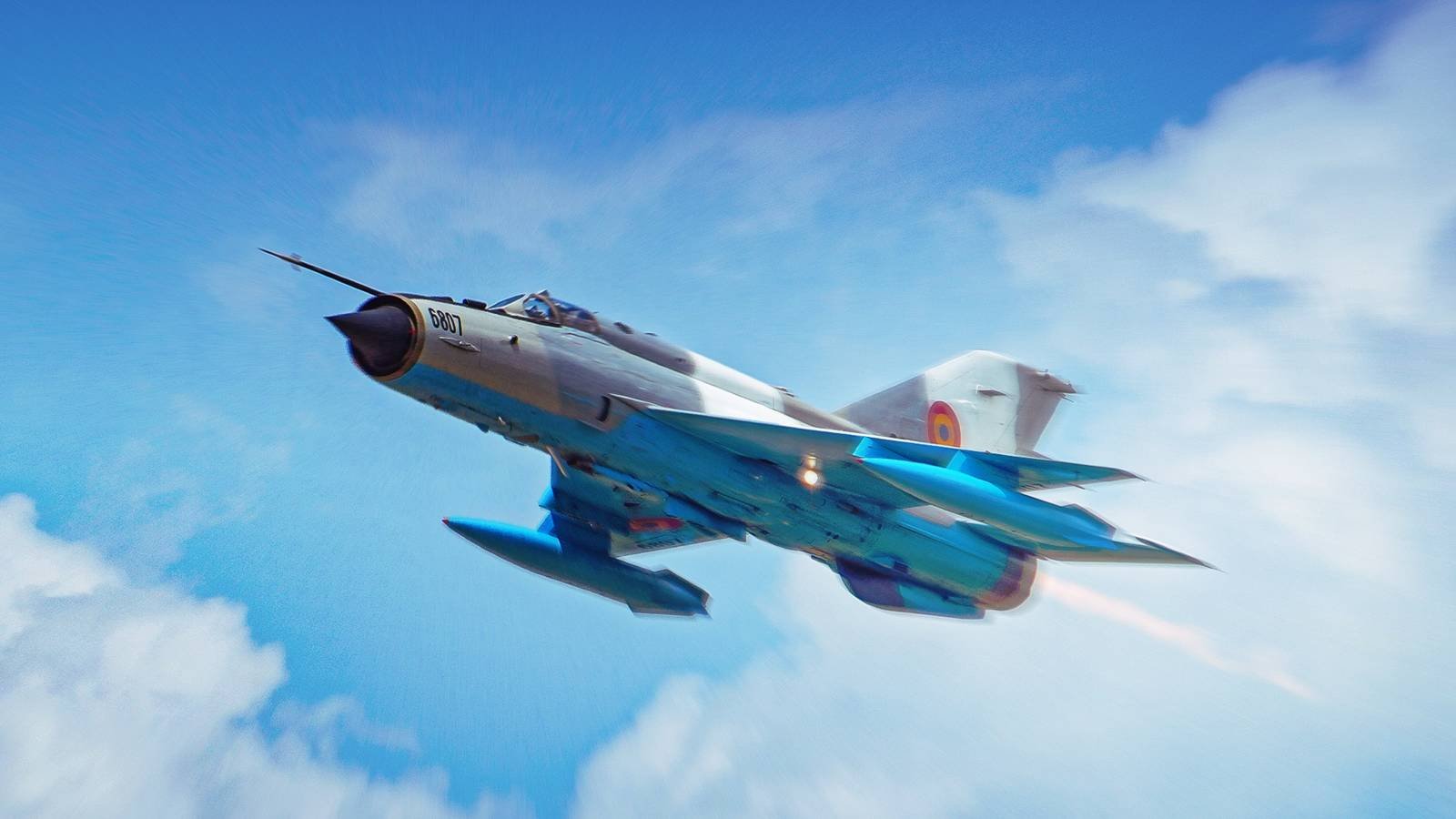
The Legacy of the MiG-21: A Final Farewell to an Iconic Jet Fighter
As the world soars into a new era of aviation, the legendary MiG-21 Fishbed, once the undisputed monarch of the skies, begins to fade from the tapestry of military aviation history. Born in the bustling corridors of Soviet innovation in the mid-20th century, this remarkable supersonic jet fighter and interceptor first graced the heavens in 1955, entering service mere years later in 1959. An astonishing 11,496 units were produced, predominantly within the grand factories of the USSR, with additional models crafted under license in India and Czechoslovakia. A hallmark of efficiency and agility, the MiG-21 was not merely a fighter; it was a symbol of an epoch—a testament to both prowess and international reach in the art of aerial combat.
As we embrace the dawning of 2026, the whispers of inevitability echo through the corridors of air force command centers worldwide. The MiG-21, grand and gallant, has all but vanished from active service, leaving only its storied shadow. In stark contrast, the rugged Northrop F-5 remains aloft, poised and ready for deployment, a choice often favored for those requiring a steadfast yet affordable light fighter. While the MiG-21 Fishbed has been ceremoniously retired in myriad nations, its successors, the Chinese J-6, F-7, and J-8, linger in limited capacity—an elegy to a past era.
The Quiet Retirement: A Jet’s Unceremonious Exit
Fighter jets, it seems, are seldom celebrated with grandiosity either upon arrival or departure. They are nurtured into service gradually, with air forces meticulously ascribing them roles of escalating complexity and danger as they prove their mettle. Reluctantly, the same process unfolds in reverse as aircraft age. The dwindling pool of older models transitions from frontline duty to support roles borne of necessity rather than prestige.
In modern Russia, an air force’s storied relationship with craft such as the MiG-21 wanes against the backdrop of increased obsolescence. Approximately half of its combat fleet—including venerable MiG-29s, Su-25s, Su-27s, and Su-24s—now lies dormant, relegated largely to obscurities away from the foreground of aerial confrontation.
In this somber progression, we find perhaps the most poignant sadness: the MiG-21 Fishbed departs with a muted farewell, a scenario met with little fanfare. For its legacy is muddied by the vagaries of military reporting—some nations, particularly those shrouded in secrecy, yield no insight into the status of their fleets. Thus, the true fate of these aircraft often hovers tantalizingly just out of reach, leaving enthusiasts and historians to speculate wildly. It is conceivable that clandestine forces—such as those in North Korea—may still cradle a handful of these storied machines for future engagements, yet clarity eludes us.
A Wave of Obsolescence: The End of an Era
Transitioning from the vitality of the Soviet Union to the challenges of the post-Cold War landscape, Russia scrambled to address its overpopulation of aircraft, swiftly retiring its MiG-21s by the mid-1990s. Yet, their resonance continued as they remained operational with various export air forces for years following. The sun sets slowly on Europe’s MiG-21s, with Croatia marking the continental finality of its own fishbeds in November 2024, a symbolic end paired with an upgrade to the sleek Dassault Rafale.
In a historical cascade, Romania bid farewell to its MiG-21 LanceRs in 2023, signifying a graceful transition to former Norwegian F-16s. India, the last bastion of the Indian-made MiG-21 Bison, announced its retirement in September 2025, symbolically closing the chapter on a model that had once commanded the firmament. No longer will the skies showcase this emblematic jet fighter, and its combat efficacy, a relic of memory, will stir curiosity only for the most ardent of aviation aficionados.
As we dive deeper, the statistics reveal a bitter truth. Presently, a staggering 101 MiG-21s remain on the books across seven nations, a mere residue of the once-vibrant legacy. Among these fragments, North Korea, Angola, Yemen, Libya, Mali, Mozambique, and Sudan lay claim to the vestiges of what was once the bold and agile fighter—most of which appear to be little more than rusting relics stationed at airbases, accumulating dust rather than accolades.
In stark contrast, the Chengdu J-7—an elegant adaptation of the MiG-21—persists, particularly within Bangladesh and Myanmar, as it continues to carve its niche amongst contemporary forces.
A Gradual Fade, Yet an Enduring Spirit
Despite their retirement, the spirit of the MiG-21 continues to inspire stories of glory and daring adventures. The tragic narrative echoes a global trend—Yemen, Libya, and Mali are embroiled in turmoil with their skies silent, the MiG-21s caught in the web of conflict yet scarcely taking flight. Meanwhile, southern Africa’s silence reflects a broader transition where antiquated aircraft yield their presence to modern drone warfare and low-cost fighters.
Consequently, as we reflect upon this poignant tapestry, the MiG-21 emerges not merely as an aircraft, but a veritable character in the almanac of military aviation, its tale interwoven with resolute courage and relentless ambition. Though its final flight may be shrouded in uncertainty, its legacy endures—a testament to the relentless pursuit of innovation and strength amidst the storms of history.
The MiG-21 Fishbed may have slipped quietly from the skies, but its essence, formidable and undiminished, remains a vigilant sentinel of the skies that once embraced its aerial dance.