
Title Suggestion:
“A Legacy in the Skies: Six Iconic Military Aircraft Shaped by Scarcity”
In the grand tapestry of aviation history, military aircraft have often been emblematic of innovation and intricate craftsmanship. Within this expansive arena, we find a unique subset of extraordinary machines whose very existence is defined by their scarcity. Some of the most sophisticated and impactful designs were birthed in remarkably limited numbers, standing as testaments to strategic foresight and the relentless pursuit of excellence.
Among these aviation giants, the Northrop B-2 Spirit, with its unparalleled stealth capabilities, represents not just a leap in technology, but a symbol of modern air power forged in the crucible of necessity. Likewise, the Lockheed SR-71 Blackbird, a marvel of engineering mastery, soared above the clouds, forever redefining the limits of reconnaissance. Completing this masterpiece of rarity, we glimpse into the stories of six pivotal aircraft whose influence far eclipses the numbers that graced the tarmacs.
Lockheed F-117 Nighthawk: 64 Black Jets
The Lockheed F-117 Nighthawk emerges from the shadows as the world’s inaugural operational stealth combat aircraft, its genesis cloaked in the secrecy of Lockheed’s revered Skunk Works during the chilly embrace of the Cold War. With its meticulously faceted visage engineered to disrupt radar waves, this aircraft revolutionized the concept of aerial warfare, making exposure an obsolete concern in the high-stakes realm of precision strikes.
Despite bearing the letter "F," traditionally reserved for fighters, the F-117 is ingeniously crafted as a precision strike performer, adept at delivering laser-guided munitions upon highly guarded fortifications such as command centers and radar installations. Its design—a marvel of aerodynamics—required an avant-garde fly-by-wire control system, dazzling for its time and solidifying its status as a harbinger of future aerial technologies. With a total of 64 units—five YF-117 pre-production variants alongside 59 operational F-117A aircraft—production numbers were tightly constrained by both the aircraft’s specialized mission and the program’s classified nature.
Having first graced the skies during Operation Just Cause in 1989, the F-117 captured the world’s imagination during the Persian Gulf War, executing strikes with surgical accuracy against Baghdad’s most fortified targets. Official retirement from frontline duty occurred in 2008, yet remnants of the Nighthawk linger, employed for testing and training, ensuring that its ghost remains woven into the fabric of contemporary air combat operations.
Dassault Mirage IV: 62 Delta-Wing Bombers and Spy Planes
Representing France’s indomitable spirit of aviation, the Dassault Mirage IV stands resolute, a coruscating emblem of strategic prowess. This supersonic marvel, conceived in the midst of the Cold War, gracefully navigates the interplay of power and deterrence, serving as the cornerstone of France’s airborne nuclear capabilities.
Unlike its contemporaries, the Mirage IV was sculpted not from the need for sheer numbers but rather from a purposeful vision of maintaining a credible deterrent amidst an era of burgeoning air defense systems. With a production run of only 62 units, each aircraft transitioned from high-altitude nuclear strike missions to clandestine reconnaissance duties, illuminating the breadth of its versatility throughout a service life spanning four decades.
Through the exigencies of evolving military strategies, the Mirage IV exemplifies how a limited cadre of highly specialized aircraft can remain pivotal in safeguarding national interests, illuminating the delicate balance between defense and diplomatic assurance.
Hawker Siddeley Nimrod: 49 RAF Cold War Classics
Emanating from the fertile imagination of Britain’s aeronautical engineers, the Hawker Siddeley Nimrod embodies the quintessence of maritime vigilance and anti-submarine warfare. Born from the de Havilland Comet lineage, this elegant aircraft quickly evolved into a stalwart protector of the North Atlantic, ever watchful against the silent threats lurking beneath the waves.
With its illustrious first flight in 1967, the Nimrod signified a paradigm shift from conventional patrol craft to a sophisticated aircraft equipped with advanced radar and sensor systems. Over a span of two decades, 49 Nimrods were realized, reflecting the particularized operational demands that characterized UK maritime patrol strategies at the time.
Although birthed from a limited production philosophy, the Nimrod excelled in versatility, contributing profoundly to Cold War operations and later engagements, underscoring the adage that sometimes, less truly is more.
Tupolev Tu-160: 38 White Swans and Counting
Known in NATO circles as "Blackjack," the Tupolev Tu-160 is a towering paragon of aviation engineering—the largest and fastest supersonic strategic bomber to grace our skies. Crafted during the zenith of the Soviet Cold War aerospace program, this aircraft exemplifies the relentless pursuit of technological dominance, adorned with variable-sweep wings that enhance its lethality in intercontinental strike roles.
Initially produced in modest numbers, the Tu-160 has not only withstood the ravages of time but has also welcomed periodic revivals of production, with the modernized Tu-160M variants continuing to emerge from the factories in Russia. Stationed for decades as a heavyweight in strategic doctrine, the Tu-160 reinforces the notion that a limited fleet can wield unprecedented influence in the vast theater of air power.
Lockheed SR-71 Blackbird: 32 Aircraft Built
Regarded as the crown jewel of aerodynamic prowess, the Lockheed SR-71 Blackbird remains a marvel of engineering brilliance. Capable of soaring at Mach 3.2 and reaching altitudes that transcended conventional airspace, this reconnaissance titan was not merely an aircraft but a symbol of unrestrained ambition.
Its configuration—crafted primarily from titanium—was meticulously designed to withstand the searing temperatures generated at extreme flight velocities. With just 32 operational aircraft built, including operational variants and trainers, the Blackbird’s legacy is defined not solely by the rarity of its units but by the indelible impact it left on military reconnaissance.
Even as it flitted gracefully through the highest stratosphere, capturing unrivaled imagery of vast terrains, the SR-71’s swan song resonates through history—a reminder of the heights humankind can reach when armed with creativity and conviction.
Northrop B-2 Spirit: 21 Flying Wings
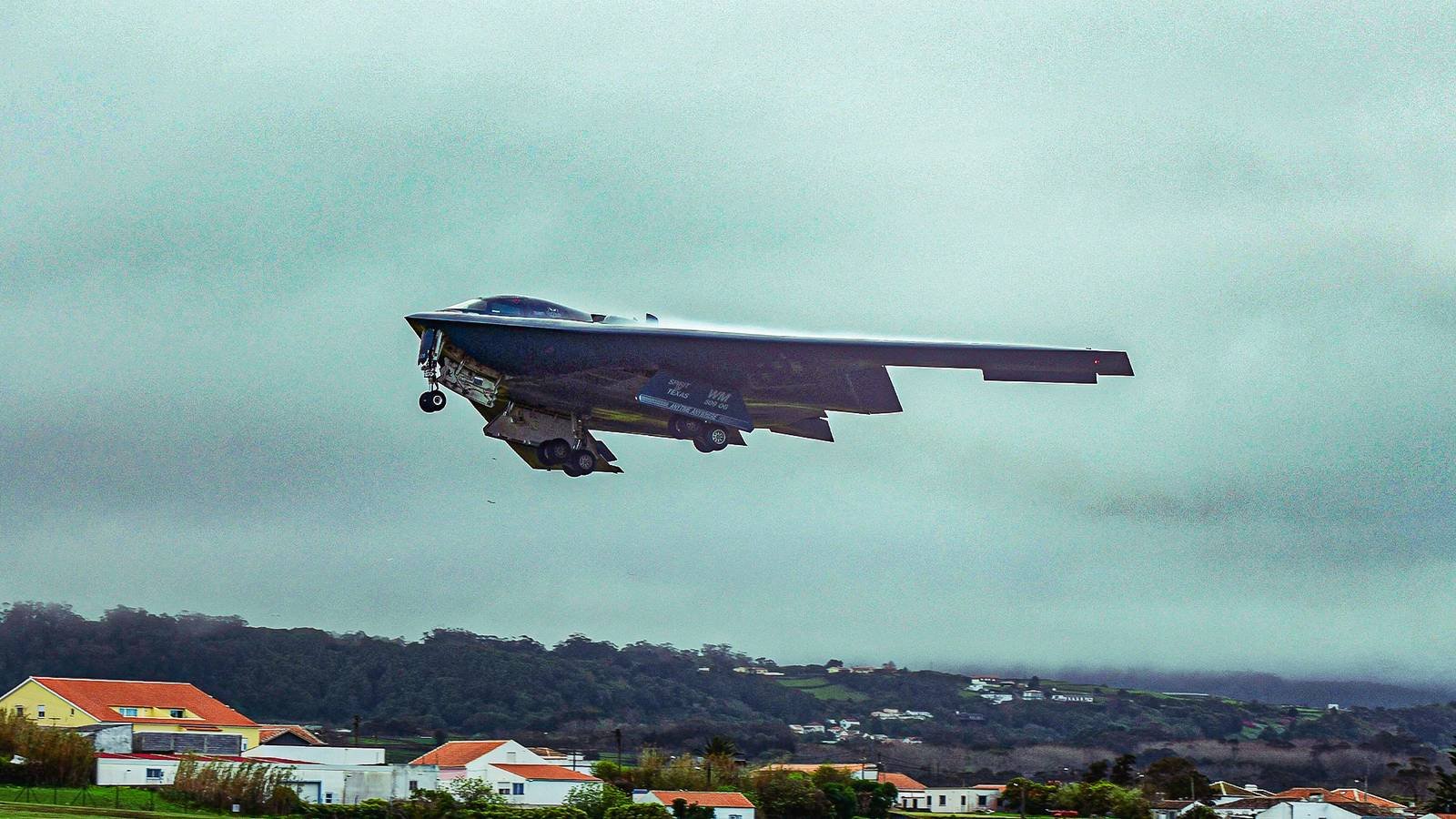
In the pantheon of aviation, few aircraft can claim the prestige and mystique that envelop the Northrop B-2 Spirit, a breathtaking synthesis of stealth technology and modern military strategy. With only 21 flying wing designs manufactured, this aircraft exists as a living testament to the fusion of artistry and engineering, embodying the principles of minimal radar cross-section and advanced materials that have redefined the landscape of air dominance.
Conceived in response to the multifaceted challenges of modern warfare, the B-2’s operational capabilities underscore the notion that sometimes, the rarer an entity, the greater its value. In light of its minuscule production numbers, the B-2 stands as a beacon of strategic deterrence, continuing to play an indispensable role in the United States Air Force’s arsenal as they navigate the complexities of international security.
In this realm of aviation, scarcity gives way to significance, illustrating that the most profound legacies often arise not from abundance but from the rarefied moments when innovation meets purpose. Each of these iconic aerial creations carries with it the whispers of history, aspirations, and dreams that soar far beyond mere numbers.